

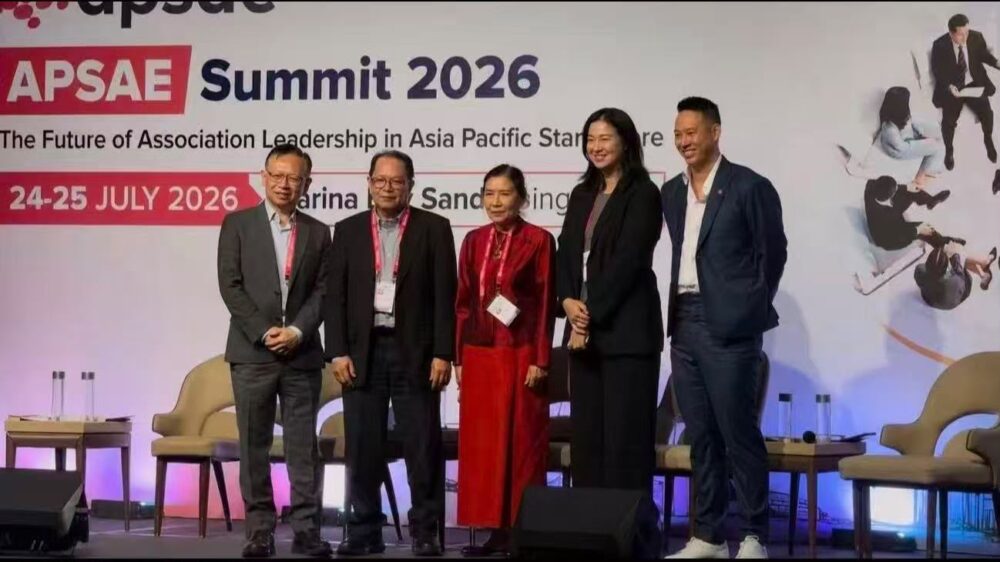
The inaugural Asia Pacific Society of Association Executives (APSAE) Summit 2026, held on 24–25 July at Marina Bay Sands, Singapore, arrived at an important moment for the region’s association sector. Bringing together more than 100 senior association leaders from 64 organisations across 16 countries, the summit was more than a professional development event. It marked the beginning of what APSAE hopes will become Asia-Pacific’s first dedicated professional community for association executives.
More than 83% of delegates held C-suite, President, Secretary General, Founder or Director-level positions, representing organisations that collectively serve over 500,000 professionals and institutions across more than 100 countries. While the programme covered topics ranging from governance and membership to artificial intelligence and advocacy, a common message emerged across the two days: association leadership in Asia-Pacific is entering a new phase of evolution.
Associations Are Being Asked to Do More
Opening the summit, APSAE President Prasant Saha highlighted why associations matter more than ever in a region that now accounts for more than half of global economic growth and population. As industries become increasingly interconnected while geopolitical tensions, technological disruption and workforce challenges reshape economies, associations have an expanding role in convening stakeholders, developing talent, supporting industries and providing trusted platforms for collaboration across borders.
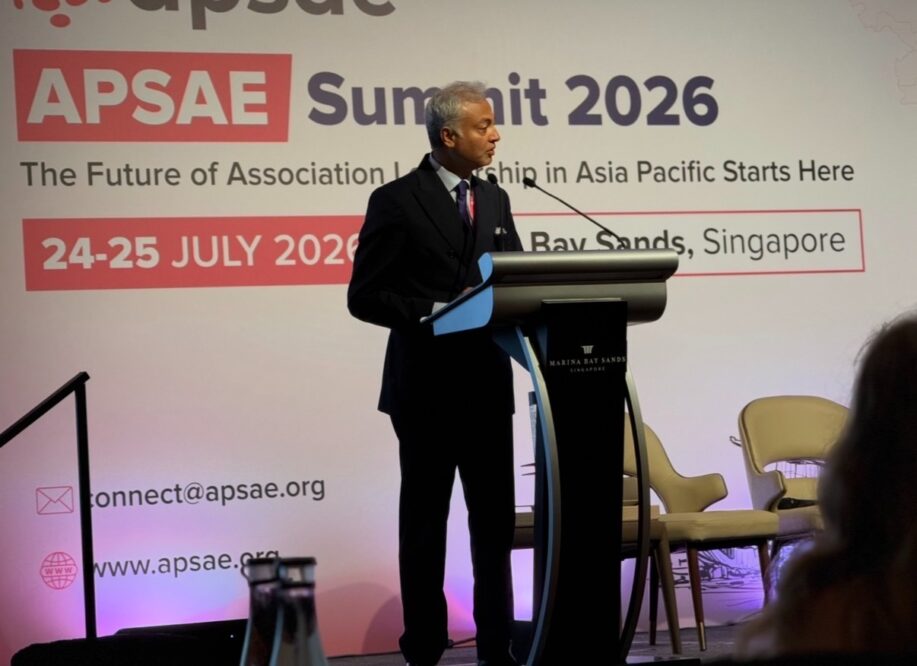
That broader role formed the foundation of many discussions throughout the summit.
Leadership coach and author Kevin Cottam challenged delegates to adopt what he described as a Nomadic Mindset—one characterised by adaptability, curiosity and continuous learning rather than fixed assumptions. His message reflected the realities of Asia-Pacific, where diverse cultures, regulatory environments and levels of organisational maturity require associations to develop solutions suited to their own contexts rather than simply adopting models developed elsewhere.
Together, the sessions suggested that the question is no longer whether associations should evolve, but how quickly they can adapt to changing expectations.
From Managing Memberships to Creating Member Value
One of the strongest themes running through the summit was the changing relationship between associations and their members.
Across discussions on member engagement, loyalty and marketing, speakers argued that membership alone is no longer enough to sustain relevance. Today’s members increasingly expect continuous learning, meaningful professional networks, advocacy, industry insights and career development throughout the year rather than value concentrated around an annual conference.
During the panel on hybrid member engagement, association leaders shared how personalised learning pathways, digital communities and peer-to-peer collaboration are replacing one-size-fits-all approaches to member engagement across increasingly diverse markets.
The conversation continued in Olena Lima’s membership marketing masterclass, where delegates were encouraged to rethink how associations communicate their value. Rather than beginning with the organisation itself, associations should first understand what keeps members awake at night and demonstrate how membership helps solve those challenges. Whether through accreditation, knowledge sharing, networking or advocacy, member value should always come before organisational promotion.
The message represented a broader shift from managing memberships to building communities centred on relevance, outcomes and long-term relationships.
Resilience Begins with Better Strategy
Financial sustainability, volunteer engagement and technology were also discussed through a strategic rather than operational lens.
Moderating the panel on Beyond Dues – Monetising Data, Partnerships & Non-Due Revenues, Ooi Peng Ee, Co-founder of Associations Commons, led a discussion on how associations can build more resilient organisations through diversified income streams, including partnerships, sponsored learning, market intelligence and other mission-aligned services.
Rather than treating revenue diversification simply as a financial objective, speakers emphasised that sustainable income should grow from stronger member value. When new products and partnerships help members solve real problems, they strengthen both the organisation’s financial resilience and its long-term relevance.
Volunteer leadership was viewed in a similar way. Rather than asking how to recruit more volunteers, discussions focused on creating leadership pathways that offer younger professionals meaningful opportunities to contribute, develop new skills and build their careers while strengthening their industries.
Technology Is a Leadership Issue
Artificial intelligence featured prominently across both days, but discussions consistently moved beyond identifying the latest tools.
Instead, speakers focused on organisational readiness. Kenny Tay, CEO of the Singapore AI Association, argued that associations should first understand their strategic priorities, operational challenges and desired outcomes before deciding how AI can support them. Governance, AI literacy and organisational culture therefore become essential foundations for successful adoption.
Used thoughtfully, AI can improve operational efficiency, personalise member engagement, strengthen learning pathways and support better decision-making. However, throughout the summit, technology was presented as an enabler of organisational strategy rather than a strategy in itself.
From Conversations to a Regional Community
Perhaps the summit’s most significant legacy lies beyond its individual sessions.
The launch of the State of Associations in Asia Pacific 2026 Report provided the region with its first dedicated research examining the association sector across more than 20 economies. The report highlights an ecosystem at a critical turning point. Nearly four in five employers across Asia-Pacific report difficulty finding skilled talent, yet the associations best positioned to support workforce development through professional education, certification and industry standards remain fragmented, with limited regional infrastructure and collaboration.
The report’s ten-point roadmap covering governance, digital transformation, talent development, volunteer leadership and sustainable growth provides association leaders with a common reference point for addressing these shared challenges.
At the same time, APSAE announced plans to extend the summit into a year-round professional community through formal membership, regional symposia, webinars, research, peer exchange and a CEO Circle. Rather than viewing the summit as a standalone event, APSAE is positioning it as the foundation of a continuing regional platform for association executives.
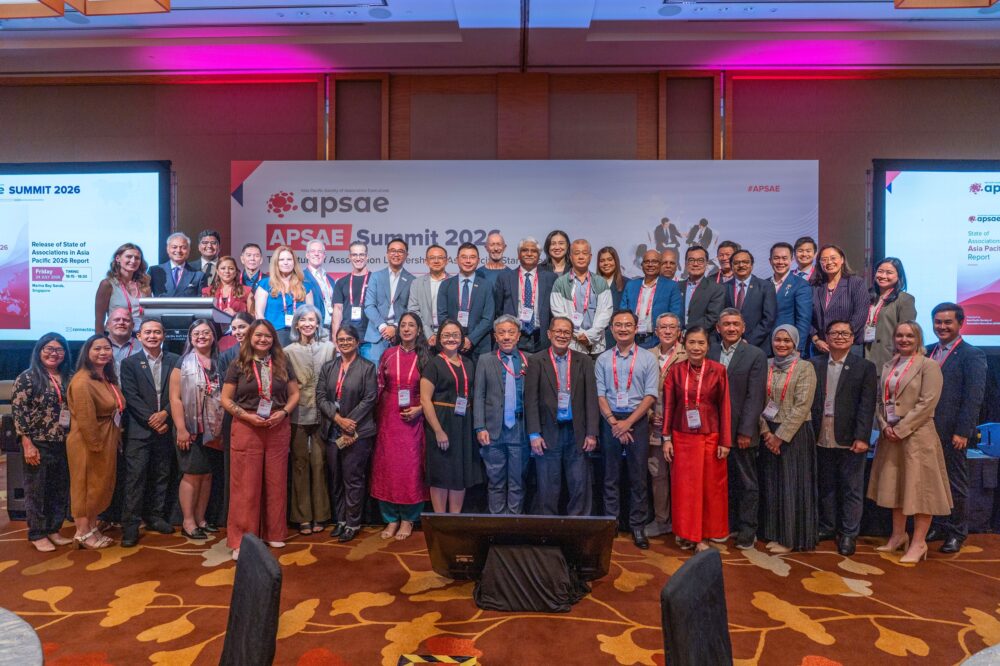
Reflecting on the summit, Prasant Saha described APSAE as Asia-Pacific’s first dedicated home for association executives, adding that the conversations and connections formed over the two days demonstrated that leaders across the region are ready to learn from one another, support one another and collectively strengthen the impact of associations.
Ultimately, the inaugural APSAE Summit 2026 may be remembered less for any individual presentation than for the broader direction it revealed. Across discussions on leadership, governance, advocacy, technology, member engagement and organisational sustainability, one message surfaced repeatedly: the future of associations will depend not simply on serving members, but on helping industries, professions and communities navigate change together.
Whether that vision is realised will depend on what happens after the summit. If the relationships, research and shared agenda launched in Singapore continue to grow through collaboration and practical action, APSAE Summit 2026 may come to represent the beginning of a stronger, more connected association ecosystem for Asia-Pacific.