

For associations that develop standards and certification schemes, issuing a certificate is only the beginning. IGBC’s Green Building rating system offers a useful case study in how associations can move from certification to long-term measurement, verification and accountability—and demonstrate that standards continue to deliver real-world impact.
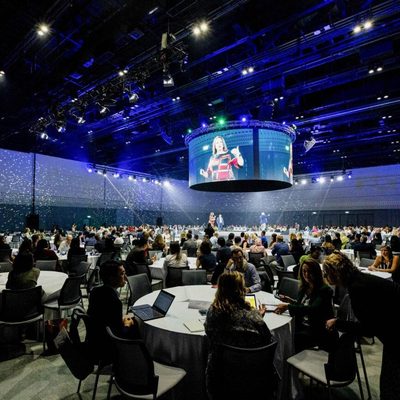
MUMBAI, India — When the Green Building Congress returns to Mumbai from 26 to 28 November 2026, the Indian Green Building Council’s (IGBC) most important test will not be how many certificates it has issued, but whether certified buildings still deliver the energy and water savings, comfort and well-being they promised years after the plaque is installed.
That question matters more than the launch of Version 4 of the IGBC Green New Buildings Rating System. IGBC’s homepage describes Version 4 as a draft for public comment and says it will launch on 27 November at the Congress. But its New Buildings page already lists the Version 4.0 guide, dated November 2025, and says all new applications from 1 May 2026 must follow NB_v4.0. On the public record, Version 4 is not a pending draft but the operative standard; the November event looks like a formal unveiling of a tool already in force. For a standards body, clear version control is itself part of credibility.
From Certification to Long-Term Performance
The stronger case study is what happens after the certificate is awarded. IGBC has built real machinery for this. Its renewal policy gives certifications issued from 1 October 2019 a three-year validity for buildings and five years for large developments; a New Buildings project seeking renewal must move into the Existing Buildings rating. The Existing Buildings O&M system, valid for three years, requires recertification against the latest version, and eligible buildings must be at least 80% occupied and operational for a year.
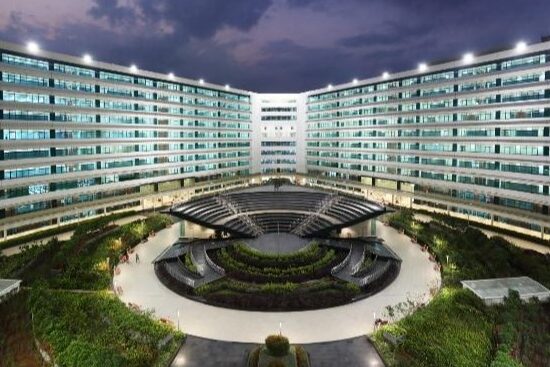
IGBC’s Performance Challenge adds an annual, jury-reviewed checkpoint. Open to certified projects with at least one year of operational data, it covers offices, hotels, hospitals, campuses, factories, warehouses and transport buildings; a jury from the building sector and academia evaluates energy and water performance against national and international benchmarks, and IGBC offers volunteer projects for remote energy monitoring. In the 2025 edition, according to IGBC, 27 projects were shortlisted, and nine were named outstanding performers, including the Infosys Crescent Building in Bengaluru, which, according to an IIHS case study, has consistently saved around 50% on energy and water bills through real-time monitoring and internal KPIs. That shows what sustained performance requires, though not that certification caused it.

What Happens When Performance Slips?
What the public record does not show is how IGBC responds when performance deteriorates. Published materials do not explain whether decline triggers technical guidance, a corrective-action plan, follow-up verification, suspension or withdrawal of certification. The Performance Challenge is voluntary, its data confidential, and monitoring offered only to volunteers; outsiders cannot know what share of certified buildings still performs, how many renew on time, or what happens to the rest. There is precedent for asking: around 2014, IGBC published actual energy and water consumption for 50 rated buildings, and the Centre for Science and Environment found
a meaningful share fell short of BEE one-star benchmarks even under generous assumptions, warning the data was self-reported and unaudited. No comparable disclosure at scale has followed.
The missing voices are the building owners and facilities managers. Did certification change how the building is run, from maintenance schedules and staff responsibilities to metering and investment decisions? What do they keep measuring, and has performance held? IGBC, in turn, should say what data it collects, who verifies it, and what action follows when verified performance slips.
Taken together, these mechanisms sketch an Association Commons Standards-to-Impact Framework: consultation, standard development, testing, training, certification, implementation, measurement, verification, corrective action, and review or recertification. The weakest link sits between verification and renewal. The lesson travels beyond construction: associations running professional accreditation, tourism, safety or sustainability schemes should not define success at the point of certification. The real question is not how many certificates an association issues, but whether the standards it creates continue to change behaviour and produce measurable outcomes after the certificate has been awarded.