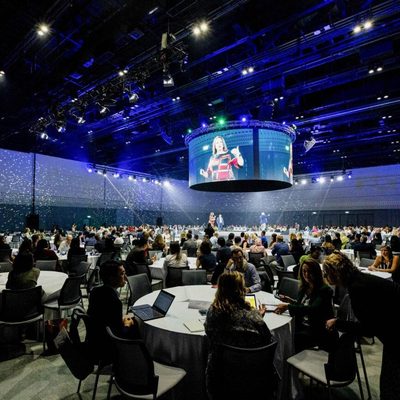



A technology exhibition can create thousands of connections, but its real value lies in what those connections become. CEATEC 2026 offers a useful case study in how associations can design the journey from technology showcase to cross-industry collaboration, pilot projects and real-world adoption—and measure what happens after the event ends.
TOKYO, Japan — When CEATEC 2026 opens at Makuhari Messe from 13 to 16 October, its theme—“Transformation: Where Companies, Industries, and Society Evolve”—will carry a demanding promise. The Japan Electronics and Information Technology Industries Association (JEITA) says the event should do more than showcase technology: it should accelerate social implementation and convert the momentum around AI, digital transformation and green transformation into practical business creation.
That makes CEATEC an Association Commons case study, not simply an exhibition preview. The central question is how an association moves an innovation from demonstration to adoption when progress requires technology providers, customers, regulators, investors, researchers and sometimes local governments to work together.
JEITA has several useful building blocks. CEATEC is organised with the Communications and Information Network Association of Japan and the Software Association of Japan, while its organising committee includes ten major technology companies. The 2026 event will also run alongside Japan Mobility Show Bizweek, whose organiser is considering multi-company co-creation and acceleration support tailored to different business stages. This expands the platform beyond electronics into mobility and other user industries.
Inside CEATEC, the X (Transformation) Park is designed around social challenges and cross-industry partnerships, including public-private collaboration, regional revitalisation, infrastructure and sustainability. The Next Generation Park connects startups, universities and research institutions with investors and corporate partners. Networking events, meeting facilities and visitor-data collection help exhibitors identify and follow potential partners.
From Connections to Implementation
These mechanisms create encounters, but encounters are not implementation. CEATEC’s published results illustrate the measurement gap. In 2025, it attracted 810 exhibiting organisations, 98,884 attendees and 222 conference sessions. Its exhibitor material also reports media coverage and average leads by booth size: approximately 400 for exhibitors with one to three booths and up to 7,000 for those occupying more than 20. These figures demonstrate reach and commercial opportunity, but they do not reveal how many leads became partnerships, pilots, procurements or wider adoption.
A narrower example shows what better evidence could look like. According to Wordly, CEATEC began using its real-time AI translation platform in 2023. By 2025, 1,800 attendees used it across 17 stages and more than 75 hours of sessions. Wordly also reports that JEITA and the Japan Electronics Show Association expanded its use to additional industry events and that the service will return in 2026. This is not a complete exhibitor-to-society case, and the evidence comes from the supplier. However, it offers a traceable sequence: operational trial, repeated use, organisational adoption and continued deployment.

Designing the Handoff
JEITA could apply that discipline across the event. Every organiser-curated pavilion or priority challenge should have a named post-event owner—within JEITA, a co-sponsoring association or an external partner—and a defined route into a committee, accelerator, standards process or policy dialogue. With participants’ consent, CEATEC could maintain a confidential project register recording the problem, partners, next decision and implementation barrier. Aggregate results could then be reported without exposing commercial information.
An Association Commons Social-Implementation Funnel would begin with exhibition and problem identification, then move through partner matching, feasibility work, pilot, policy or standards alignment, adoption and scale. At 90 days, CEATEC could report qualified matches, projects with owners and pilot agreements. At 180 days, it could track pilots launched, paid proofs of concept, regulatory engagements and data-sharing or standards work. At 12 months, the measures should become outcomes: customers adopting the solution, locations reached, investment secured, and documented improvements in cost, emissions, accessibility, safety or productivity.
JEITA cannot guarantee that every demonstration succeeds. It can, however, design the handoff, maintain accountability and distinguish productive failure from abandoned follow-up. For technology associations, that is the real measure of flagship-event value: not how much innovation was displayed, but how much moved closer to use.