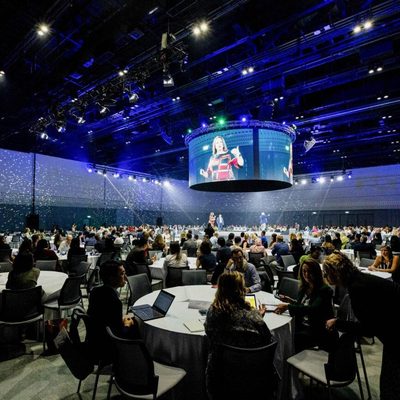


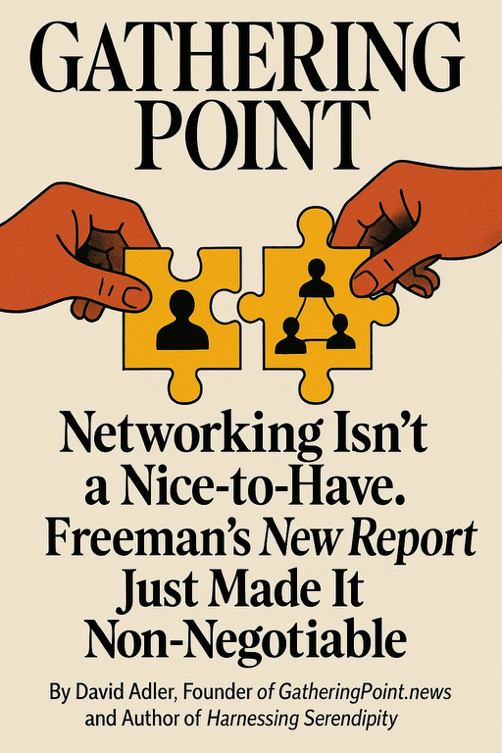
For years, the events industry has treated networking like a natural resource—automatic and effortless. Put people in a room, dim the lights, pour some wine, and wait for connections to happen. But the truth is, real connection doesn’t just occur by chance. And now, Freeman’s 2025 Networking Trends Report makes that point loud and clear.
David Adler, Editor, Gathering Point; Founder of BizBash and Washington Dossier
https://www.gatheringpoint.news/p/the-architecture-of-serendipity
As the world’s leading event production company, Freeman carries weight. They work across 90+ cities, power the biggest trade shows and conferences, and publish research that the industry listens to. Their latest report cuts through the noise with a simple message: people want to connect, but most events are failing to give them the structure, tools, and confidence to do it.
The data proves it. Freeman surveyed over 4,000 attendees, exhibitors, and organizers. Seven in ten come to events to learn something new. Three in five want to meet people they wouldn’t normally encounter. Half say that networking alone would bring them back the following year—even if the event content is only average. Yet, the experience still feels broken: one in three attendees say networking is “too salesy,” two in five find it awkward, and nearly a quarter avoid networking sessions altogether.
So what’s missing? According to Freeman, it isn’t about flash—it’s about structure. Attendees want clarity, permission, and design cues that make connection easier. They want value, not volume. Organizers and exhibitors, however, are still chasing leads and transactions, while attendees are craving relevance, discovery, and meaningful conversations.
Freeman’s advice is direct: stop leaving networking to chance. Assign someone to own it. Design experiences before the doors open. Provide prompts, facilitators, and new formats that reduce friction. In short, move beyond “networking” and start building purposeful connections.
For event organizers and exhibitors, this is the wake-up call. The demand for connection is stronger than ever—but the industry has to redesign the experience if it wants to deliver on it.