

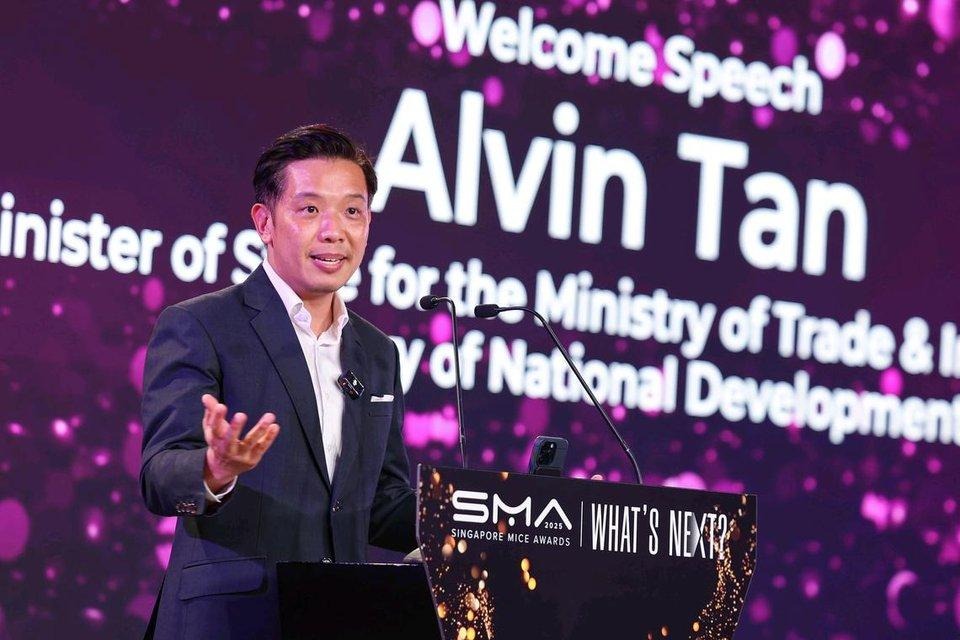
At the 2025 Singapore MICE Awards, Minister of State Alvin Tan sounded a clarion call: to achieve Singapore’s ambitious goal of tripling MICE (meetings, incentives, conferences, and exhibitions) tourism receipts—from S$1.4 billion in 2019 to S$4.5 billion by 2040—the industry must expand its talent base, especially in sustainability and technology.
Anjali Raguraman has been a journalist for more than a decade and is currently a correspondent covering politics and consumer stories spanning tourism, retail and F&B. Following a stint in breaking news at Today, she joined The Straits Times in 2015, where she covered the entertainment and nightlife beat for six years. She moved to ST’s news desk during the Covid-19 pandemic and wrote about consumer trends.
Emphasizing that “people are behind the heart of every MICE experience,” Tan highlighted the importance of recognizing the full spectrum of contributors—from early‑morning setup crews to staff who clean up after evening events. He underscored that as the sector evolves, so must its workforce. Expertise in emerging areas such as machine learning and artificial intelligence, he noted, offers a pathway to more exciting and efficient event planning.
This focus on green and tech-driven innovation is more than rhetoric. It acknowledges a pivot in how business events are designed and delivered—and signals a shift in the competencies needed to support them. As the sector navigates geopolitical uncertainty and digital transformation, cultivating a skilled workforce that can deliver both sustainability and tech-first experiences is vital.
For associations and event partners, this development underscores the need to align capacity-building efforts with future-facing demands. Investing in talent equipped to lead in both sustainability and digital innovation isn’t just strategic—it’s essential for ensuring long-term relevance and resilience in the MICE ecosystem.