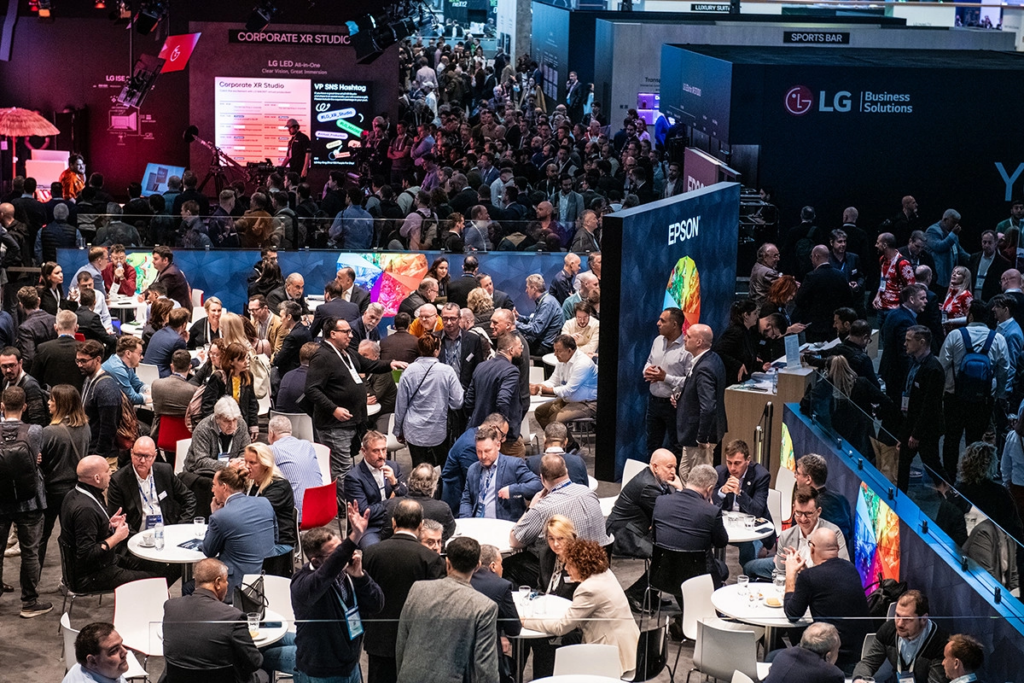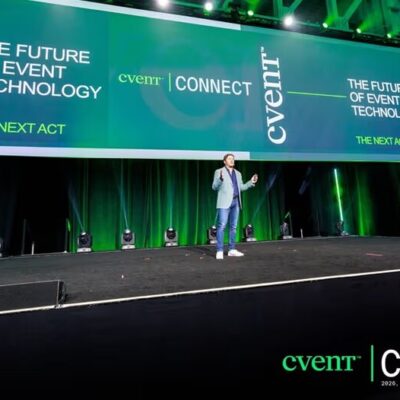


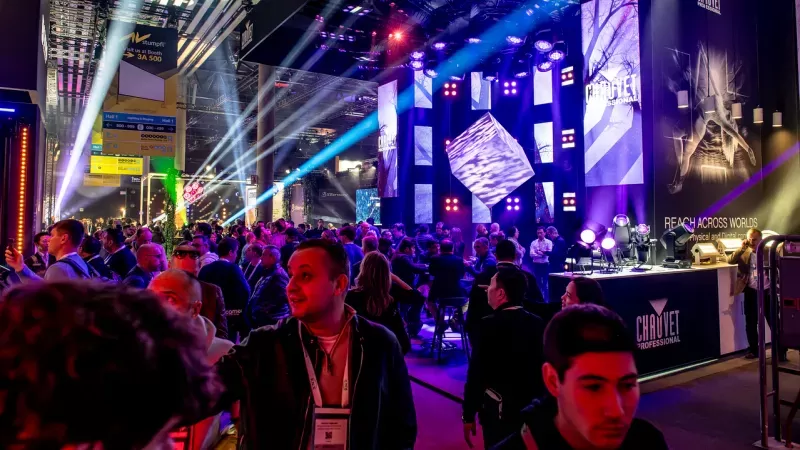
The meetings and events industry is evolving rapidly as new technologies emerge to enhance attendee engagement and streamline production. At the recent Integrated Systems Europe (ISE) conference in Barcelona — one of the world’s largest showcases of audiovisual and systems integration technology — innovations in LED displays, artificial intelligence, and automation highlighted how event professionals can create more dynamic, efficient, and immersive experiences for their audiences.
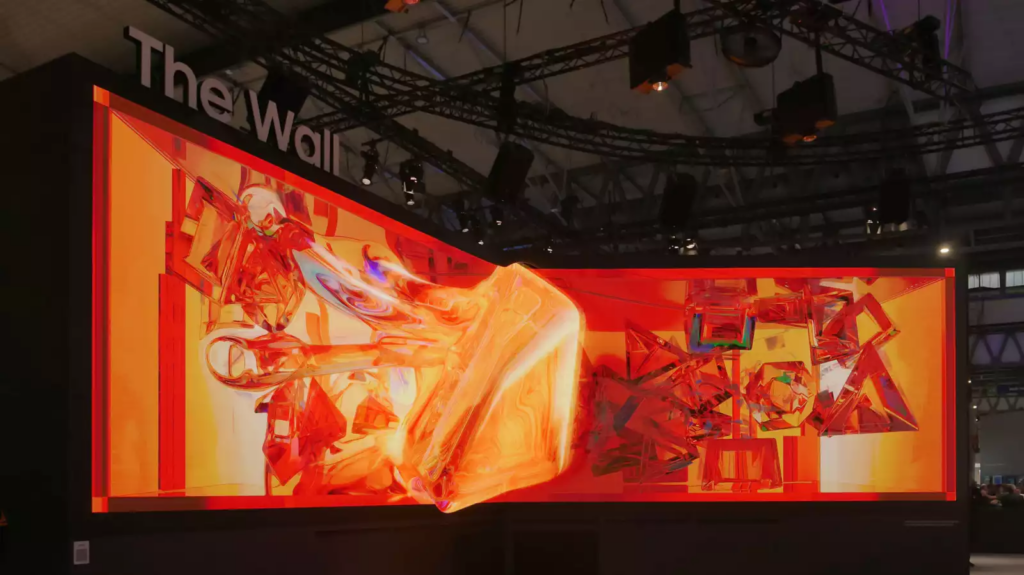
One of the most visible trends was the widespread use of LED large-format displays. These customizable video walls, which can now offer almost 180-degree immersive visuals, are becoming increasingly accessible for events. With higher pixel density, they provide crisp images for audiences at closer viewing distances, making them suitable for conferences and exhibitions that require impactful visuals.
Artificial intelligence is also gaining ground in event automation. AI-driven cameras and production tools now have the capability to track speakers, switch views, and assist technicians by reducing manual tasks. While not a replacement for human expertise, AI is expected to serve as a valuable tool, improving workflows and supporting more seamless hybrid and virtual event experiences.
Another emerging application is the creative use of video displays in unique shapes and structures, such as portals, cubes, and globes. These designs open opportunities for organizers to deliver memorable branding and immersive walk-through experiences, adding a “wow” factor to exhibitions and corporate events.
Advancements in auto-tracking and auto-framing technology also stood out, with AI-powered cameras offering “set and forget” solutions. These systems ensure participants — whether in-person or remote — remain visible and engaged without requiring constant operator adjustments. Such developments reflect a growing emphasis on efficiency and accessibility for meeting technology.
Events like ISE provide a window into the future of MICE technology, showcasing how AV innovations can transform the way associations and organizers plan experiences. As these tools become more widely adopted, the industry is poised to benefit from smarter, more engaging, and more immersive event environments.