

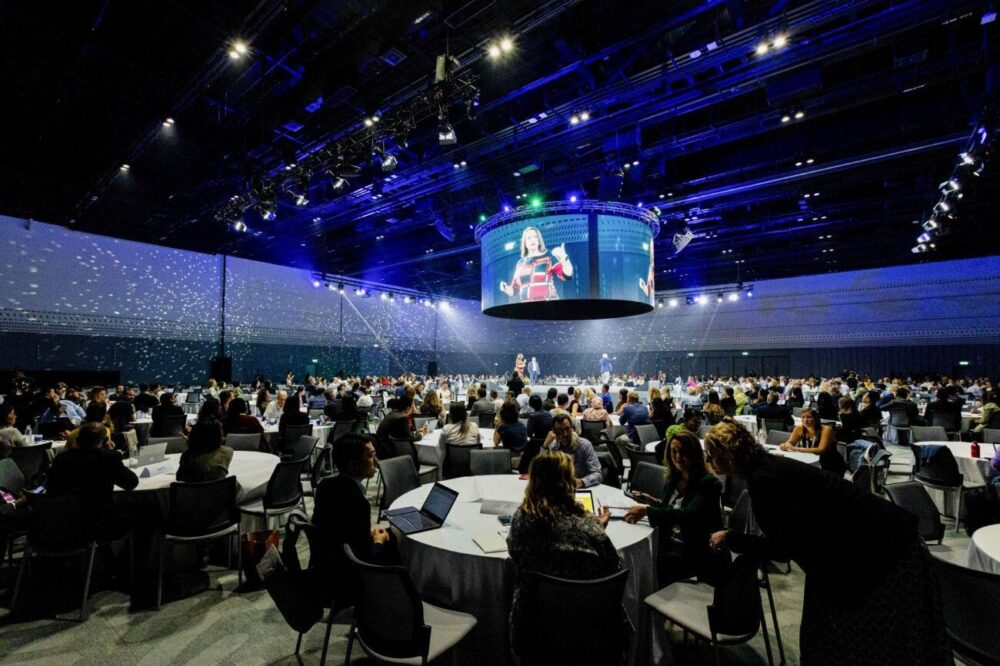
Photo credit: Boardroom / QSNCC
Your association conference attracted 1,500 delegates. But did it actually grow the association?
SINGAPORE — For decades, delegate numbers have been the most visible measure of conference success. Attendance, speakers, venue, hotel nights — these are the figures that fill board reports. Yet they tell you how busy the room was, not what the room produced. Membership growth, new partnerships, revenue, member engagement and long-term industry impact may tell boards considerably more.
A new award from ICCA suggests the association sector is ready to change the question.
The Award is Asking a New Question
In August 2026, ICCA — the International Congress and Convention Association, the global community for the association meetings industry — closed applications for its new Asia-Pacific Growth & Innovation Award. The award celebrates national associations that brought a regional conference to their destination through a competitive bidding process and turned it into a catalyst for organisational growth, innovation and multidisciplinary collaboration.
Its criteria read like a board’s growth checklist, not an event organiser’s scorecard:
- Association revenue growth
- New business opportunities
- Delegate, member and partner engagement
- Alignment between national and regional association objectives
- Measurable industry and social impact
Finalists will be announced in mid-September 2026 and will present their cases at the ICCA Asia-Pacific EvolvDestination Forum in Macau on 22 October 2026.
Why This Matters to Every Association Board
The important story is not simply who wins. It is the question behind the award: how can associations demonstrate organisational growth and long-term impact from their conferences?
A regional conference can be one of the largest investments an association board approves: years of bidding, significant budget, volunteer time and reputational risk. Attendance and prestige remain important measures of success. But the award points towards a broader expectation — that conferences should contribute to organisational growth as well as deliver successful events.
Associations can design regional conferences as organisational growth platforms rather than treating them as isolated events. A conference does not necessarily have to be a standalone profit centre. It can be an association growth engine.
The Conference as a Growth Engine
Consider what a well-designed conference can set in motion:
The conference attracts non-members → converts some into members → creates sponsor relationships → generates content and intellectual property → creates industry partnerships → raises the association’s profile → strengthens advocacy → develops future leaders → produces revenue → funds future association activities.
Each step is measurable. Each step can compound. And the likelihood of achieving these outcomes increases considerably when they are designed into the conference from the outset.
The Question Boards Should Ask
This is the question association boards should ask before approving any bid: Why should our association invest its time and resources in bidding for and hosting a regional conference?
The answer should be measurable, not rhetorical. For example, before approving a conference, a board might define its objectives this way: “This conference should generate 150 new members, open two new national chapters, secure three multi-year corporate partners and produce US$100,000 of surplus for member-development programmes.”
Now success is not simply: “We had 1,200 delegates.”
Success is: Did we grow the association?
What Changed That Would Not Otherwise Have Happened?
The single most useful question to ask after a conference may be this: What changed because of the conference that would not otherwise have happened?
The answers should come from board-level measures, not event metrics alone: membership, revenue, partnerships, sponsorship, market reach, member engagement, industry influence and measurable legacy.
Measured that way, a conference might have converted non-members into members, turned a one-off sponsor into a multi-year corporate partner, generated content that became publications, courses or standards, surfaced future leaders from the organising committee, strengthened the association’s advocacy or produced revenue that funded member-development programmes.
The next time a conference report reaches the board, attendance should be only the beginning. The more important question is what the conference left behind: more members, stronger partnerships, new revenue, greater influence or capabilities the association did not have before.