

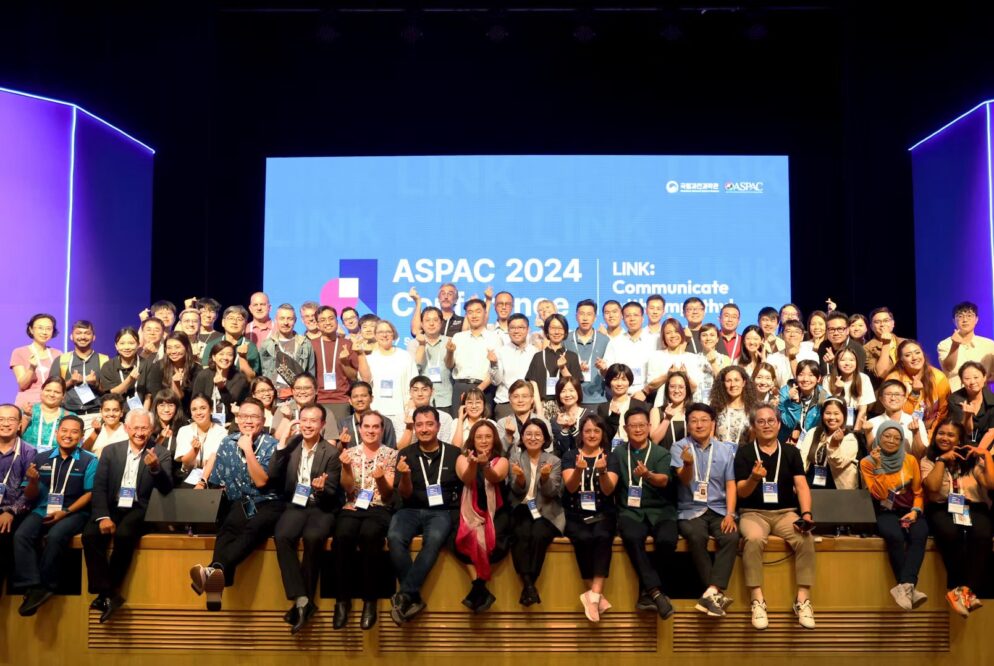
When members of the Asia Pacific Network of Science and Technology Centres (ASPAC) gather in Thailand from 19 to 22 August 2026, the significance of the meeting may extend well beyond its programme.
ASPAC is using its 2026 biennial conference to test a bigger proposition: whether a long-established association event can be redesigned not simply to exchange knowledge, but to influence what member organisations do after delegates return home.
ASPAC itself has described the 2026 conference as the beginning of a “reboot”. In a message ahead of the event, ASPAC President Maria Isabel Garcia acknowledged that the professional environment, member expectations and ways of working have changed significantly.
For associations with long-running flagship events, this raises a fundamental question: does a conference’s longevity and popularity necessarily mean its established format is still delivering the greatest possible value to members?
ASPAC appears prepared to test the answer.
From a Leadership Event to a Whole-Organisation Conversation
One of the most significant changes is who the conference is designed to involve.
Rather than concentrating primarily on institutional directors and senior executives, ASPAC 2026 is explicitly opening participation to professionals across different levels and functions, including educators, curators, researchers, exhibition teams and frontline science communicators.
That change could have implications beyond attendance numbers.
Association conferences have traditionally relied heavily on individual delegates carrying knowledge back into their organisations. But institutional change rarely depends on a single person. Decisions may be made by senior management, while implementation often involves employees across departments and levels.
Bringing a wider range of professionals into the conference therefore creates the possibility for knowledge to be exchanged not simply between leaders, but between the people responsible for translating ideas into exhibitions, educational programmes, research and audience engagement.
For ASPAC, the opportunity is to make the conference a broader platform for organisational learning rather than primarily a meeting of institutional representatives.
Whether that happens will depend on what participants do with the knowledge afterwards.
From Listening to Participating
The conference, jointly organised by ASPAC and the National Science Museum Thailand under the theme “Museums Empowering Futures: Science Engagement in the Age of Uncertainty,” also introduces changes to how participants interact.
Alongside two keynote sessions, the programme includes ten new Science Exchange Tracks intended as shared discussion spaces around practical issues facing the sector.
Activities will take place across the National Science Museum Thailand and the National Science and Technology Fair 2026, connecting formal conference discussions with science engagement in practice. Participants will have opportunities not only to hear case studies but also to observe exhibitions, educational activities and public engagement in an operating environment.
Another change is the Digital Nursery, which replaces the traditional physical poster display with a digital space where members can share projects, questions and early-stage ideas.
Science Central, meanwhile, is positioned as a platform for professional connections and longer-term collaboration rather than simply a conventional exhibition area.
Individually, these may appear to be programme innovations. Collectively, however, they point towards a broader shift: reducing reliance on one-way information delivery and creating more opportunities for members to contribute knowledge themselves.
That distinction matters.
The value of an association conference increasingly lies not only in the expertise presented from the stage, but also in the collective expertise already present among its members.
The Real Test Begins After the Conference
More interaction, however, does not automatically create institutional change.
The more revealing measure of ASPAC’s reboot may therefore come months rather than days after the conference: whether members can point to programmes changed, collaborations started, practices adopted or ideas tested because of conversations that began in Thailand.
That also raises questions about how associations measure conference success.
Attendance, delegate satisfaction and session ratings remain useful indicators. But if a conference is intended to strengthen members’ professional and institutional standing, other measures become relevant.
Did participants establish relationships with peers they would not normally encounter? Did those relationships continue after the conference? Did institutions test ideas introduced during the event? Did staff share what they learned with colleagues? Did collaborations emerge between member organisations?
An attendee returning home saying “I learned something useful” represents one level of value.
A member organisation being able to say “we changed something because of what our people learned and the relationships they developed” represents another.
The distinction is important for associations seeking to demonstrate the strategic value of their flagship events.
When Tradition Meets Organisational Renewal
ASPAC’s experiment raises questions relevant well beyond science and technology centres.
Many associations have conferences that have operated successfully for decades. Their longevity creates trust, familiarity and a sense of belonging among members. But those same qualities can make established formats difficult to question.
ASPAC’s reboot suggests that continuity and renewal need not be opposing choices.
An association can preserve the identity and relationships associated with a flagship event while reconsidering who participates, how knowledge is exchanged, and what should happen after the meeting ends.
For association leaders, this raises three useful questions: Does the format still reflect what members need? Does the event create strategic value beyond networking and ceremony? And can the association renew a familiar institution without losing the continuity that made it valuable in the first place?
ASPAC 2026 provides a regional case through which those questions can be observed in practice.
The immediate signs of success will be visible in Thailand: participation across professional levels, engagement with the new formats, and the quality of exchanges.
The more important evidence will emerge later.
If participating institutions can demonstrate that conference conversations resulted in new practices, stronger professional networks, collaborations or changes within their organisations, ASPAC’s biennial conference will have become more than a recurring member event.
It will serve as infrastructure for professional development, knowledge application, and institutional capacity-building.
Ultimately, the success of a conference reboot cannot be measured solely by how different it feels. It has to be measured by what changes within member organizations afterward.