

Bangkok’s selection to host IEEE ICRA 2030 illustrates how convention bureaux, universities and professional organisations can combine their strengths around a strategically important sector.
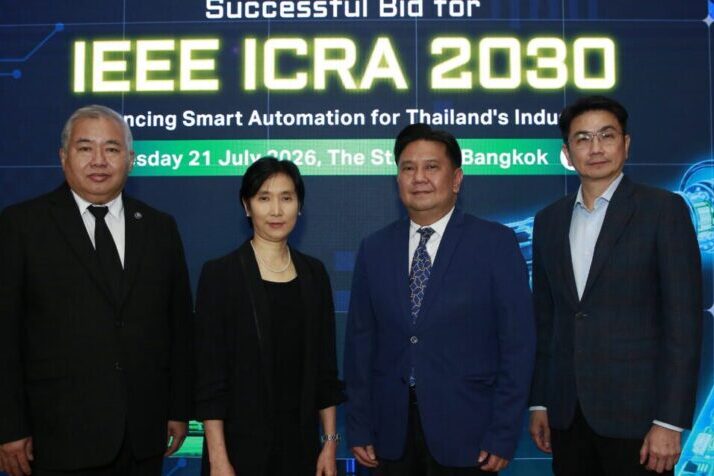
BANGKOK, Thailand — Thailand has secured hosting rights for the 2030 IEEE International Conference on Robotics and Automation, with the Thailand Convention and Exhibition Bureau presenting the win as a platform for robotics, artificial intelligence and advanced manufacturing.
TCEB’s announcement identifies a bid partnership involving the bureau, Mahidol University’s Faculty of Engineering, the IEEE Robotics and Automation Society Thailand Chapter and IEEE Thailand Section. The Thailand Medical Robotics and AI Association is also listed among the hosting organisations. The bureau projects approximately 10,000 delegates, including 8,000 international participants, and more than THB1.06 billion in direct economic circulation.
The underlying association connection is important. IEEE’s Robotics and Automation Society invited proposals from Asia Pacific members, placing local professional leadership at the heart of the selection process.
For Associations Commons, the case demonstrates why congress bidding should begin with the scientific or professional community. A destination’s facilities help make an event possible, but local champions can explain why the meeting belongs there and how it connects with a field’s development. A university may contribute research networks and programme expertise. A national professional chapter can mobilise members and identify emerging practitioners. A convention bureau can coordinate destination support and help organise the wider bid proposition.
These contributions work best when responsibilities are explicit. Association boards considering a bid should establish who owns scientific decisions, financial exposure, operational delivery and institutional commitments. Enthusiasm needs a structure that can survive changes in individual leadership.
The long preparation period also creates scope for useful work before the congress. Potential activities include professional exchanges, student engagement and connections between researchers and relevant industries. Such initiatives would need separate agreements; they should not be treated as automatic outcomes of the hosting award.
For policymakers, the opportunity is to connect a global meeting with a clearly defined sector objective. For associations, it is to strengthen their professional community while protecting the international character and educational purpose of the event.
Bangkok’s win offers a practical example of those interests converging. The challenge ahead is to convert the bid’s ambitions into a credible delivery plan, with transparent measures for participation, knowledge exchange and the partnerships that continue beyond the congress itself.