
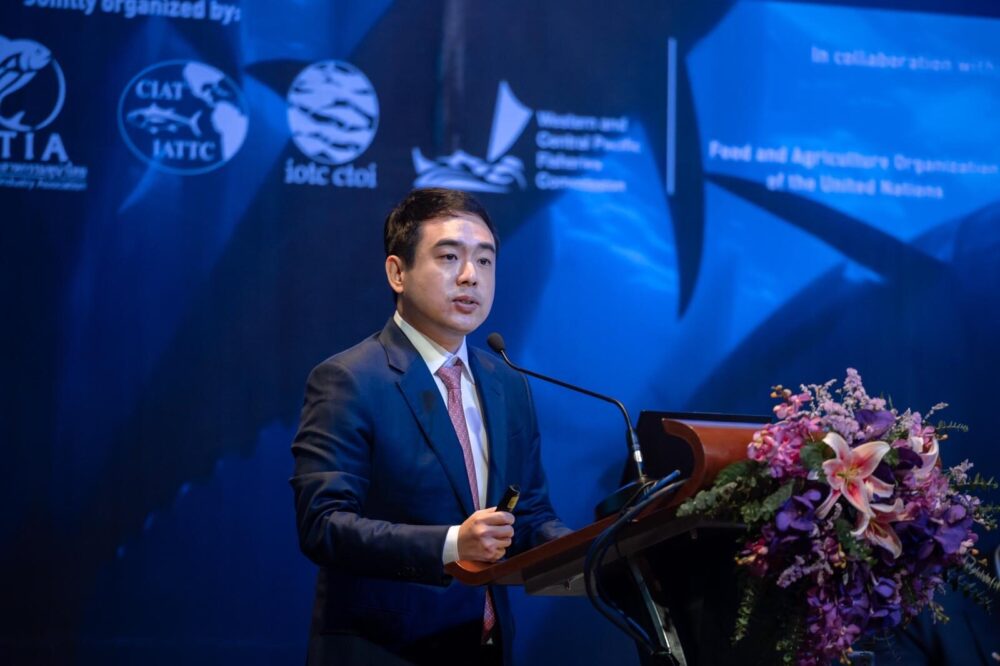
The seminar “Challenges in Human Rights, Child Labour and Forced Labour in Thailand’s Fishing and Seafood Industries,” organised by the Thai Tuna Industry Association (TTIA), was held on 13 March 2025 at Chulalongkorn University in Bangkok, Thailand. The event brought together representatives from seafood companies, government agencies, non-governmental organisations (NGOs), and human rights experts involved in the fisheries and seafood processing sectors.
The seminar focused on labour-related challenges within global seafood supply chains, with discussions involving stakeholders from the Ministry of Labour, the Thai Food Processors Association (TFPA), academic institutions, and industry representatives. The programme included policy discussions and expert-sharing sessions examining risks, regulatory frameworks, and industry practices related to labour conditions.
Key topics addressed during the seminar included child labour prevention, forced labour and labour rights enforcement, and supply chain compliance with international standards. Representatives from TTIA, TFPA, the Ministry of Labour, and the Institute of Asian Studies at Chulalongkorn University contributed to discussions on monitoring mechanisms and enforcement systems aimed at strengthening labour protections within the industry. Sessions also examined how companies can align with international frameworks and meet regulatory requirements in key export markets, including the European Union and the United States.
In addition to labour issues, discussions also addressed supply chain transparency and traceability. Industry representatives highlighted the role of traceability systems in verifying the origin of raw materials and reducing the risk of illegal, unreported, and unregulated (IUU) fishing. These measures were discussed in the context of strengthening oversight across the tuna supply chain and improving accountability in sourcing practices.
The seminar also provided a platform for stakeholders to exchange perspectives on improving working conditions and employment practices. Contributions from government agencies, NGOs, and industry participants focused on approaches to mitigating labour risks, including monitoring systems, compliance frameworks, and collaborative initiatives aimed at protecting workers’ rights.
Governance and regulatory alignment were recurring themes throughout the discussions. Participants examined international labour standards and compliance requirements, alongside the role of transparency and information-sharing in strengthening oversight. The seminar also highlighted the importance of coordination between industry, government, and civil society organisations in addressing labour-related challenges across the seafood sector.
The event reflects ongoing efforts within Thailand’s seafood industry to address labour and compliance challenges while maintaining alignment with international standards. As global scrutiny on supply chains continues to increase, platforms such as this seminar provide an opportunity for stakeholders to engage in dialogue and explore approaches to strengthening accountability and responsible practices across the sector.