


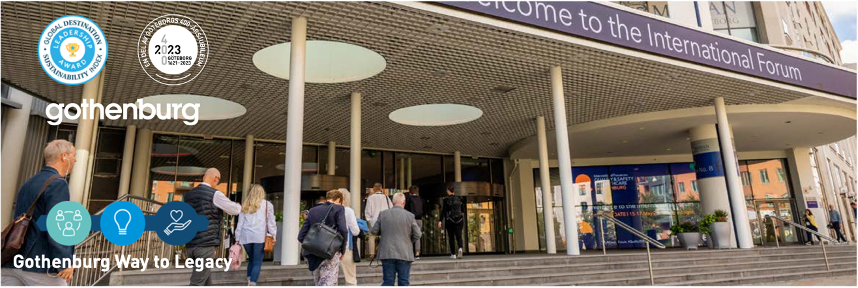
The 2022 International Forum on Quality and Safety in Healthcare in Gothenburg offers a strong example of how associations can structure international forums to express and achieve legacy goals.
Hosted at the Swedish Exhibition & Congress Centre, the forum was strategically designed not just to disseminate knowledge but to leave a measurable, long-term impact on public health systems. What made this event stand out was its intentional integration of legacy thinking from the start—focusing on local population health, knowledge transfer, policy engagement, and workforce development.
The event convened global stakeholders across healthcare, academia, and policy, while also engaging local and regional actors, including patients and civil society. This inclusive approach ensured that the forum’s outcomes would resonate beyond the venue, embedding new ideas within the Swedish health system and sparking cross-sector collaboration.
For associations, this case illustrates how event design can embed strategic legacy objectives. Key tactics include:
- Aligning event themes with local and national policy goals
- Creating pathways for collaboration between international experts and local practitioners
- Involving end beneficiaries, such as patients or community groups, in program development
- Framing sessions to generate not just knowledge, but action and change
As cities and venues increasingly prioritize legacy, associations can take the lead by embedding purpose into their programming and measuring outcomes beyond attendance.
The Gothenburg Forum serves as a model for associations seeking to move from transactional to transformational events. By doing so, associations not only serve their members—they elevate their relevance, amplify their industry’s societal value, and contribute meaningfully to the regions they meet in.