


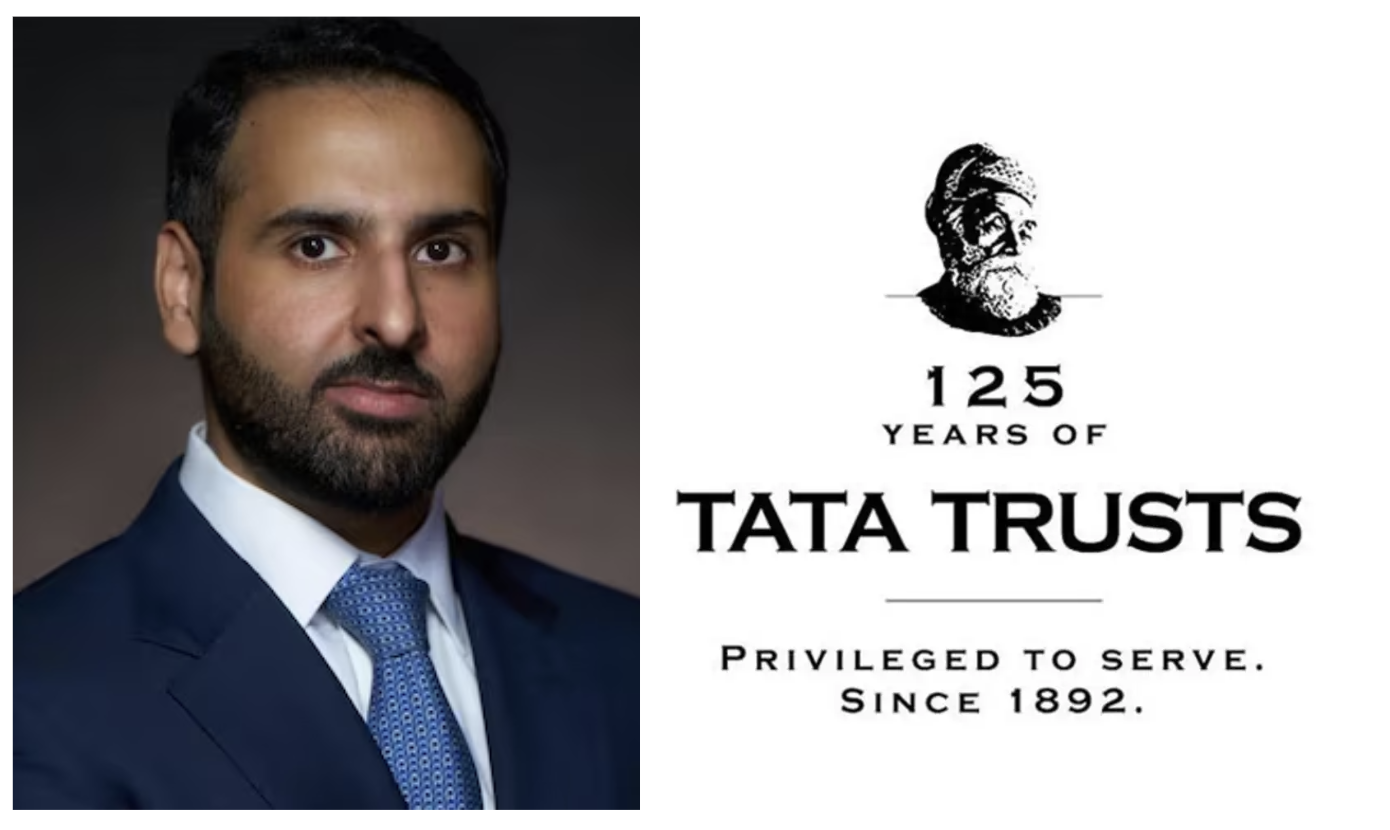
Neville Tata’s induction into the Sir Ratan Tata Trust board in January 2026 reflects a carefully paced generational shift within one of India’s most influential philanthropic institutions.
A measured generational transition is unfolding within Tata Trusts, following the induction of Neville Tata into the board of the Sir Ratan Tata Trust on 17 January 2026. The appointment, reported by journalist Samar Srivastava in January 2026, comes at a time when governance evolution is becoming more visible across the Tata philanthropic ecosystem.
The Sir Ratan Tata Trust is one of the two principal trusts that together hold a controlling stake of roughly two-thirds in Tata Sons, the holding company of the Tata Group. As a result, trustee appointments carry significance beyond philanthropy, influencing the long-term stewardship of one of India’s largest and most values-driven business groups. Neville Tata’s induction follows recent changes at the Sir Dorabji Tata Trust, where he already serves as a trustee, reinforcing the sense of a coordinated transition rather than an isolated move.
Neville Tata brings operating experience from within the Tata Group, most notably through his involvement with Trent Ltd, where the growth of brands such as Zudio has reshaped the group’s retail footprint in India’s value fashion segment. Since 2024, he has also served on the board of the Tata Indian Institute of Skills, aligning him closely with the Trusts’ priorities in education and workforce development. While his role at the Trusts is fiduciary rather than executive, this exposure introduces perspectives shaped by contemporary consumer markets and fast-scaling businesses.
The appointment also sits within a broader governance context. Noel Tata, chairman of Tata Trusts, has been consolidating oversight responsibilities while maintaining the long-standing separation between trust governance and operating leadership at Tata Sons. At the same time, recent governance refinements—such as moving away from lifetime trusteeships toward fixed terms—signal a more structured approach to succession and accountability.
The Sir Ratan Tata Trust has historically played a central role in shaping the group’s social mission across education, healthcare, rural development, and social innovation. Neville Tata’s entry does not signal a shift in purpose, but it marks an incremental recalibration of stewardship. In an institution known for continuity, the appointment reflects an acknowledgement that future governance will need to balance legacy with familiarity in a rapidly changing India.