

Hilton has achieved its global 2030 landfill waste reduction target four years ahead of schedule, marking a significant milestone in the hotel group’s long-term sustainability programme.
The achievement was announced in Hilton’s latest Travel with Purpose Report, which also outlines continued progress in reducing carbon emissions, water consumption and waste intensity across its global portfolio. Since 2008, the company has recorded a 50.9 per cent reduction in carbon emissions intensity across managed hotels, a 37.1 per cent reduction in water intensity and a 64.7 per cent reduction in landfill waste intensity. Franchised properties also achieved a 36.0 per cent reduction in carbon emissions intensity.
Hilton said the results reflect continued investment in operational efficiency and sustainable hotel development. New properties are increasingly incorporating environmental considerations into their design, including the Hilton Garden Inn Brussels Airport, which opened in 2025 with geothermal energy systems, more than 600 solar panels and 100 per cent renewable electricity. The property has also achieved BREEAM Excellent, WELL Gold and DGNB Gold certification.
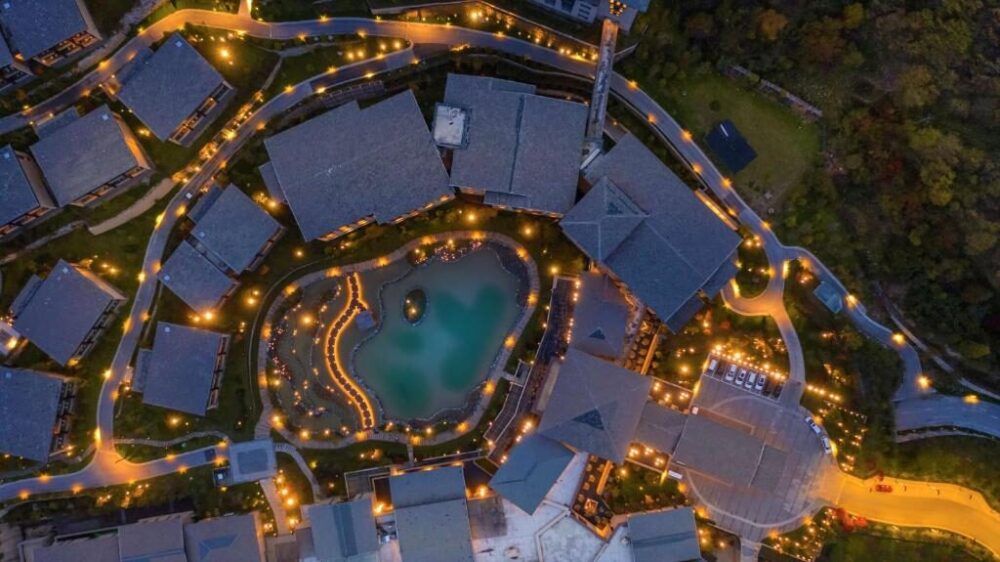
The company has also introduced its inaugural Travel with Purpose Awards, recognising 40 hotel teams for measurable environmental and community initiatives. Among this year’s recipients are Hilton Jiuzhaigou Resort in China, Waldorf Astoria Bangkok in Thailand and Hilton Garden Inn Serangoon in Singapore, highlighting the contribution of Asia-Pacific properties to Hilton’s wider sustainability programme.
Katherine Lugar, Executive Vice President of Corporate Affairs and President of the Hilton Global Foundation, said the company’s Travel with Purpose strategy continues to deliver measurable environmental progress while strengthening long-term value for the business, guests and local communities.
As sustainability expectations continue to grow across the travel and business events sectors, hotel operators are increasingly being measured not only by sustainability commitments, but by their ability to demonstrate tangible progress against publicly stated targets. Hilton’s latest results reflect a broader industry shift towards measurable environmental performance and transparent reporting.