
South Korea’s decision to position Vietnam as a regional distribution hub for Korean food products illustrates how business events can serve as instruments of trade development rather than simply promotional showcases.
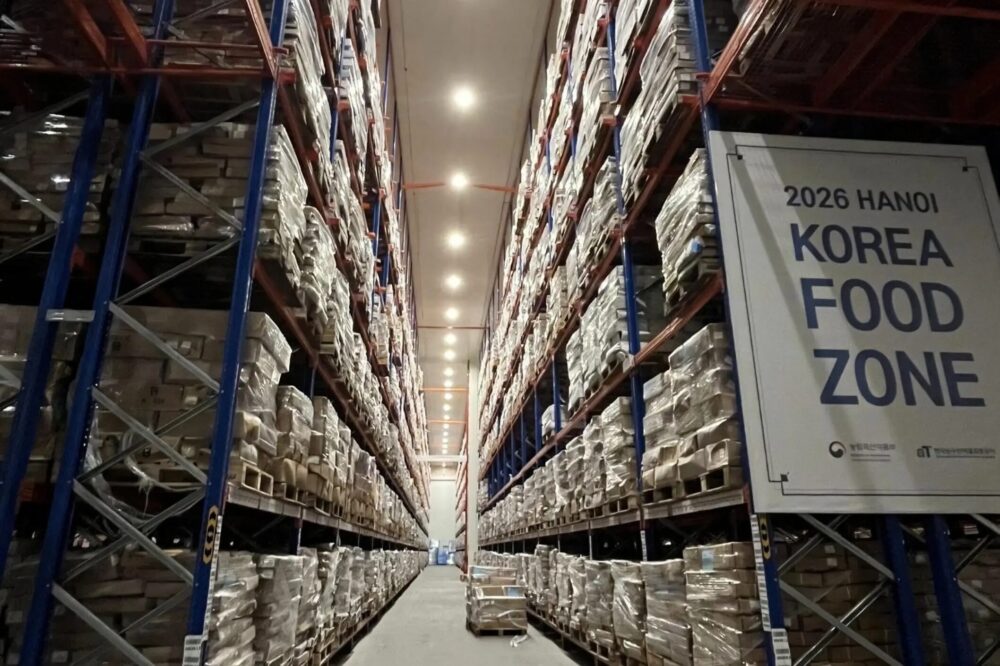
The initiative was advanced during the ASEAN K-Food Fair 2026, held from 2 to 4 July at the National Convention Center in Hanoi. Jointly organised by South Korea’s Ministry of Trade, Industry and Resources and Ministry of Agriculture, Food and Rural Affairs, the event brought exporters, buyers, government agencies and distribution partners together around a broader strategy to expand Korean food sales across South-east Asia.
Under the plan, Vietnam will act as a logistics and distribution base for Korean food products entering neighbouring ASEAN markets. South Korean authorities are exploring partnerships with established retailers, including K-Market, which operates more than 150 stores in Vietnam. Its local logistics network could support the distribution of Korean products beyond Vietnam into Cambodia and Laos.
The commercial outcomes reported from the fair demonstrate why governments and industries continue to invest in face-to-face events. Forty-five South Korean agricultural and food exporters met 107 importers from ASEAN markets, producing 46 memoranda of understanding valued at approximately US$21 million. The programme also included consumer-facing activities featuring Korean street food, halal products, fresh produce and cultural experiences.
For associations, convention bureaux and event organisers, the initiative offers a useful example of how trade events can support long-term market development. The fair was not treated as an isolated exhibition. It formed part of a coordinated ecosystem involving policy support, export promotion, buyer matchmaking, consumer engagement and regional distribution planning.
This approach also highlights the importance of measuring event performance beyond attendance figures. While visitor numbers and exhibitor participation remain useful indicators, the more meaningful outcomes include partnerships formed, market access secured, distribution channels established and commercial agreements initiated.
Industry and trade associations are well placed to support such outcomes. They can identify export-ready companies, recruit qualified buyers, provide market intelligence and maintain relationships after an event concludes. Their role can extend from convening participants to helping members navigate regulations, cultural differences, supply-chain requirements and potential local partnerships.
The South Korean initiative therefore provides a broader lesson for association leaders: successful business events should be designed as platforms within a continuing market-development strategy.
As governments and companies seek growth across increasingly competitive regional markets, exhibitions and trade fairs can offer something digital outreach alone cannot easily replicate—the opportunity to build trust, assess potential partners and move from initial conversations to commercial collaboration. In this case, the ASEAN K-Food Fair became not merely a venue for promoting Korean products, but a practical launchpad for a wider ASEAN expansion strategy.