

A World Economic Forum dialogue in late 2025 brought business leaders together to confront a central question: how leadership decisions today will shape work, skills and value creation in an AI-driven economy.
In 2025, the World Economic Forum convened the second edition of its Scenarios for the Global Economy Dialogue Series, focused on Four Futures for Jobs in the New Economy: AI and Talent 2030. The initiative responds to mounting pressure on organizations to adapt as artificial intelligence moves rapidly from experimentation into the core of operations, reshaping jobs faster than workforce systems can traditionally respond.
Rather than offering predictions, the Forum’s scenarios outline alternative paths for how AI and talent could interact by 2030—from productive human–AI collaboration to more destabilizing outcomes where technology adoption outpaces skills development. The goal is practical: to help leaders stress-test assumptions and make better strategic choices amid uncertainty.
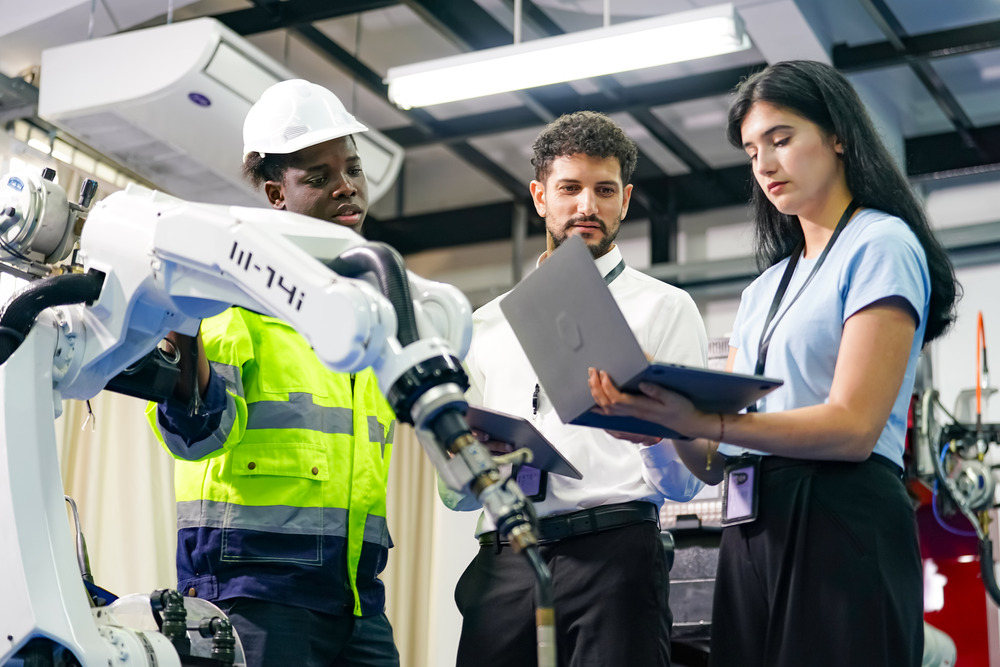
Several industry leaders illustrated what those choices look like in practice. At Siemens, manufacturing leaders described AI’s shift from isolated automation toward redesigning entire workflows around human–AI collaboration. The opportunity lies in augmented organizations where judgement and creativity are amplified, while the risk is inertia and insufficient reskilling. In industrial environments, Rockwell Automation pointed to AI-enabled autonomy that allows engineers and operators to step back from repetitive tasks and focus on system-level improvement, provided safety, reliability and workforce readiness are built in from the start.
Education and learning emerged as a critical lever. Pearson highlighted how generative and agentic AI can embed personalized learning directly into daily work, but warned that productivity gains will depend on closing the gap between what AI tools can do and how effectively people can use them. Other sectors, from energy to real estate, echoed a common theme: hybrid workforces of humans and machines are expanding managerial responsibility, not reducing it.
For association leaders, several strategy lessons stand out. First, AI strategy and talent strategy can no longer be separated. Second, continuous learning must be treated as a performance capability, not a support function. Third, leadership accountability remains central even as work becomes more distributed across humans and systems.
As the Forum’s scenarios make clear, the future of jobs will be shaped less by technology itself than by the decisions institutions make now about people, skills and purpose.