
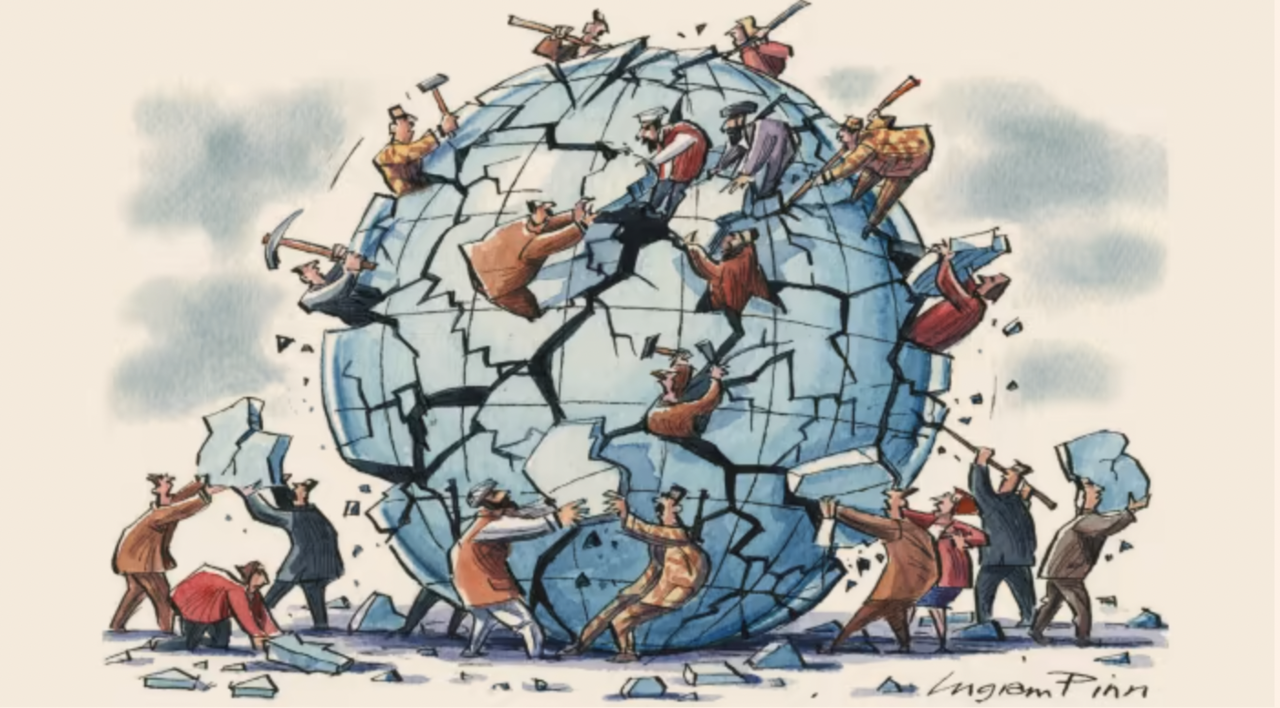
As geopolitical tension, AI adoption, and cultural polarization converge, new analysis from IESE Business School outlines the strategic pressures leaders must prepare for in 2026—and the choices that will define organizational resilience.
Why now? Entering 2026, business leaders are operating in an environment where growth persists, but the foundations beneath it are increasingly unstable. In January 2026, IESE Business School published a synthesis of insights from its professors and international experts, responding to a shared concern: familiar playbooks are no longer sufficient in a world shaped by geopolitical fragmentation and accelerating technology.
The analysis points to continued global expansion, with the International Monetary Fund forecasting 3.1% GDP growth in 2026, but warns that uncertainty shocks are becoming more frequent and more synchronized across economies. For strategy leaders, this means planning for volatility as a baseline, not an exception.
Artificial intelligence is expected to move from experimentation to deeper operational use. A concrete example is the Generality–Accuracy–Simplicity (GAS) framework, which helps leaders assess trade-offs when deploying AI systems at scale. Rather than assuming one-size-fits-all solutions, organizations are being pushed to decide where precision matters most, where usability drives value, and where complexity must be absorbed elsewhere in the system. Productivity gains, the report suggests, will come when AI is embedded into core processes that enable new business models, not peripheral tasks.
Talent strategy is also shifting. Early indicators show downward pressure on entry-level wages in AI-exposed roles, while senior expertise retains value. This places a premium on roles designed around continuous learning, domain knowledge, and adaptability, especially as geopolitical pressures reshape labor mobility and organizational structures.
Other forces are advancing more quietly. Sustainability efforts are continuing, often with less public signaling, while cultural polarization is entering unexpected arenas such as global sport, including the upcoming FIFA World Cup hosted across North America. In these contexts, leaders are advised to anchor decisions firmly in organizational purpose.
Taken together, the 2026 outlook points to a clear strategic imperative: build depth, expect disruption, and align technology, talent, and purpose now to remain credible in what comes next.