
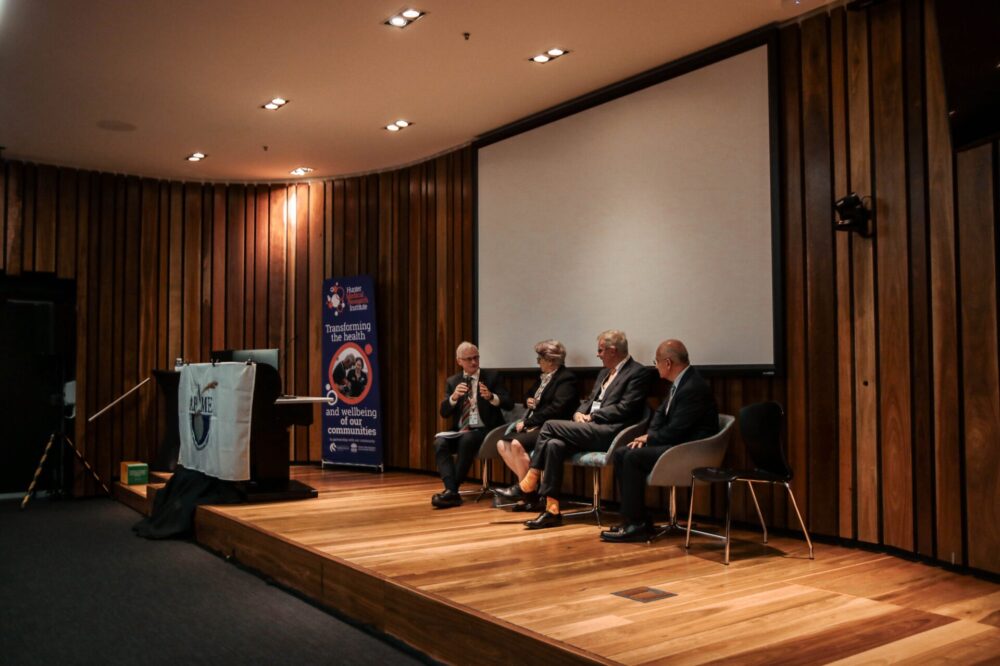
MANILA — When medical journal editors, researchers and publishing professionals from across the Asia-Pacific gather at the University of the Philippines Manila on August 20–21, the immediate subject confronting them will be artificial intelligence.
But the bigger question is one that reaches far beyond medical publishing: what happens when technological change moves faster than formal regulation? Can a professional association step into that gap and establish standards that an entire professional community can actually put into practice?
That is the challenge facing the Asia Pacific Association of Medical Journal Editors (APAME) at its 2026 Scientific Meeting.
AI is already being used for language editing, literature searches, information summarisation, data processing and manuscript preparation. The debate has therefore moved beyond whether it should be used.
Editors now have to determine when authors should disclose AI use, how detailed those disclosures should be, whether reviewers may use AI, what happens when unpublished manuscripts are uploaded to third-party platforms, and how journals should deal with fabricated references or erroneous medical judgements generated by AI.
These may appear to be technical publishing questions. But collectively, they present APAME with a much larger association-management challenge: how does an organisation turn broad professional principles into common rules, practical tools and behaviour that members will adopt?
When global principles are not enough
International medical publishing organisations have already established important principles.
The International Committee of Medical Journal Editors (ICMJE) states that AI tools cannot be listed as authors and that human authors remain responsible for manuscript content, citation accuracy and potential plagiarism. Authors, reviewers and editors should disclose their use of AI during the publication process.
It also warns that submitted manuscripts are confidential. Editors or reviewers who upload unpublished material to generative AI platforms that cannot guarantee confidentiality could violate authors’ rights and the integrity of peer review.
The World Association of Medical Editors (WAME) has similarly issued recommendations to guide journals in developing their own policies.
But having principles is not the same as having an operating system.
Individual journals still need to determine what must be disclosed, what uses are acceptable, what uses should be prohibited and what happens when the rules are breached.
Without greater consistency, an AI practice accepted by one journal could require further disclosure at another and be prohibited by a third.
For medical publishing, that fragmentation has consequences beyond the publishing community. Inaccurate claims can migrate from research papers into clinical guidelines, health policy, media reports and patient education.
This is where an association such as APAME can play a role that individual institutions may struggle to perform on their own.
Associations as rule-makers and capacity builders
APAME’s opportunity is not to replace government regulators.
It is to use something professional associations already possess: the authority of their communities, their ability to convene experts and their capacity to build consensus across institutions.
That becomes particularly important in a region as diverse as the Asia-Pacific.
Major international publishers may have research-integrity teams, technology departments, legal advisers and specialist policy staff capable of continuously updating AI policies.
Many smaller medical journals across the region do not.
They may be operated by universities, hospitals and professional societies, with editing and peer review heavily dependent on part-time staff and volunteers. They may support the same principles of transparency and research integrity but lack the resources to independently develop disclosure forms, investigation procedures, reviewer protocols and continuing training.
If every journal has to start from scratch, technological change could widen rather than narrow existing disparities in publishing capacity.
APAME’s role can therefore go beyond telling members to “use AI responsibly”.
It can help translate principles into common author-disclosure templates, reviewer statements, editorial decision checklists, investigation procedures and training modules that journals of different sizes can actually implement.
That makes APAME relevant beyond medical publishing.
Professional associations in law, engineering, finance, education and other sectors are confronting similar questions as AI enters professional practice. Few possess regulatory authority, but many have the professional credibility and convening power to establish expectations before formal regulation catches up.
What would an executable AI standard look like?
Some journals in the region are already developing their own rules.
The Philippine Journal of Otolaryngology, Head and Neck Surgery, for example, requires authors to disclose AI use in their cover letters. Where AI contributes to analysis, results, tables, images or code, authors must provide further information including the tool used and its purpose.
Such initiatives show that broad principles can be translated into concrete workflows.
The next step is to determine whether individual practices can become a workable regional baseline.
A common disclosure standard would not require every journal to use identical wording. But APAME could establish a minimum set of questions:
- What AI tool and version were used?
- Was AI used for research, analysis, writing, translation or language editing?
- Which content was verified by humans?
- Were any manuscripts, patient information or unpublished data uploaded to an external system?
- Who ultimately accepts responsibility for the accuracy and research integrity of the content?
Peer review presents another test.
AI may help reviewers summarise material or improve the language of reports, but uploading an unpublished manuscript to an external AI platform may expose confidential information.
Journals therefore need clear rules establishing when AI use is prohibited, when permission is required and when its use must be disclosed.
These seemingly mundane operational details will ultimately determine whether association-led consensus changes professional practice — or remains confined to conference discussions.
Standards only work if members can implement them
Rules alone will not solve the problem.
Associations also have to build the capacity of their members to apply them.
APAME has already established some continuity. Its 2025 virtual scientific meeting attracted more than 150 participants and addressed AI in medical publishing and peer review. Recordings remained available online, enabling subsequent training and allowing the 2026 Manila meeting to build on previous discussions rather than treating AI as a new conference topic each year.
Training also helps avoid two extremes: accepting every AI application without scrutiny or simply attempting to prohibit AI altogether.
Language-support tools, for example, may improve publication opportunities for researchers writing in a language other than their first. Automation can also reduce administrative pressure on editorial teams with limited resources.
The more useful question is therefore not simply whether AI should be used.
It is which tasks AI may assist with, which judgements must remain human, how its use should be disclosed and who remains accountable for the result.
A continuously updated training system could extend APAME’s influence far beyond the delegates attending its annual meeting.
Member journals could use common materials to onboard editors, guide reviewers and educate authors. Smaller publications could access expertise they might otherwise be unable to develop independently.
In that sense, training is not an addition to governance. It is part of the governance system itself.
What should remain after the conference ends?
This leads to another question relevant to associations far beyond APAME:
What should actually remain after an association congress is over?
Attendance numbers, presentations, photographs, and networking are important measures of an event’s success. But associations also have the opportunity to use their congresses as deadlines for collective decision-making — producing standards, systems and commitments that continue to influence professional practice long after delegates return home.
APAME has done this before.
Its 2013 Tokyo Declaration placed research integrity and ethical publication at the centre of regional cooperation among medical editors.
The 2015 Manila Declaration promoted greater availability and practical impact of health research information, particularly in lower- and middle-income countries.
In 2024, APAME issued the Sydney Declaration on Predatory or Pseudo Journals and Publishers, calling on member journals to uphold peer-review and publishing quality and to educate authors, editors and reviewers about irresponsible publishing practices.
The opportunity in Manila in 2026 is to extend that tradition from declarations of principle to an evolving system of AI governance.
A meaningful legacy could include a regional statement on AI in publishing, a disclosure template that journals can adopt directly, guidance for editors and reviewers, common training materials and a standing working group responsible for updating the standards as AI technology changes.
But producing those documents would only be the beginning.
From conference outcome to governance mechanism
The harder test comes after Manila.
Who will draft the standards? Which member journals will pilot them? Who will update them when new tools and risks emerge? When will implementation be reviewed? And how will smaller journals report difficulties they encounter in applying the rules?
Without clear ownership and a timetable, even strong conference outcomes can lose momentum once participants return to their organisations.
A different model is possible.
Selected APAME member journals could pilot common standards, document implementation problems and report their experiences back to the association. Training could then be adjusted, policies revised and progress reviewed at subsequent scientific meetings.
The annual conference would consequently become more than an event.
The meeting creates a deadline for consensus. Standards preserve the collective decisions. Training supports implementation. Member experience identifies weaknesses. Subsequent meetings provide opportunities for review and revision.
The conference itself becomes part of a recurring governance mechanism.
For other associations, that may be one of the most transferable lessons from the APAME experience.
Conferences do not have to end when the exhibition closes or the final speaker leaves the stage. They can become milestones in a continuing cycle of collective action.
Public trust is the ultimate test
There is an even larger reason why this matters.
The use of AI does not automatically diminish the quality of medical publishing. Used appropriately, it can improve communication, increase efficiency and widen participation in research.
But if AI use is undisclosed, inaccurate information cannot be traced, or editors and reviewers provide confidential material to opaque platforms, efficiency may come at the expense of professional accountability.
Medical journals are not read only by researchers.
Physicians, public-health agencies, journalists and patients may all make decisions based on published findings.
The ultimate purpose of AI publishing standards is therefore not to preserve traditional editorial practices for their own sake. It is to protect the chain of trust through which medical evidence moves from research into professional and public use.
That makes the outcome of APAME 2026 worth watching.
The most important measure of the Manila meeting will not be whether delegates agree that AI needs governance. There is already broad recognition of that challenge.
The real measure will be whether APAME can establish common expectations that large and small journals can implement; create training that enables members to follow them; assign responsibility for keeping those standards current; and establish a mechanism through which experience from across the region continuously improves the rules.
The meeting’s most enduring result will not be the number of presentations devoted to AI, but the editorial workflows that participants actually change after returning to their journals.
If APAME can turn AI anxiety into executable rules — and those rules into continuing training, implementation and regional cooperation — Manila will leave behind more than another declaration about emerging technology.
It will demonstrate something much larger about the role of professional associations: when technology moves faster than regulation, associations can use consensus, professional authority and shared responsibility to help their communities write the rules they need — and keep rewriting them as the world changes.