

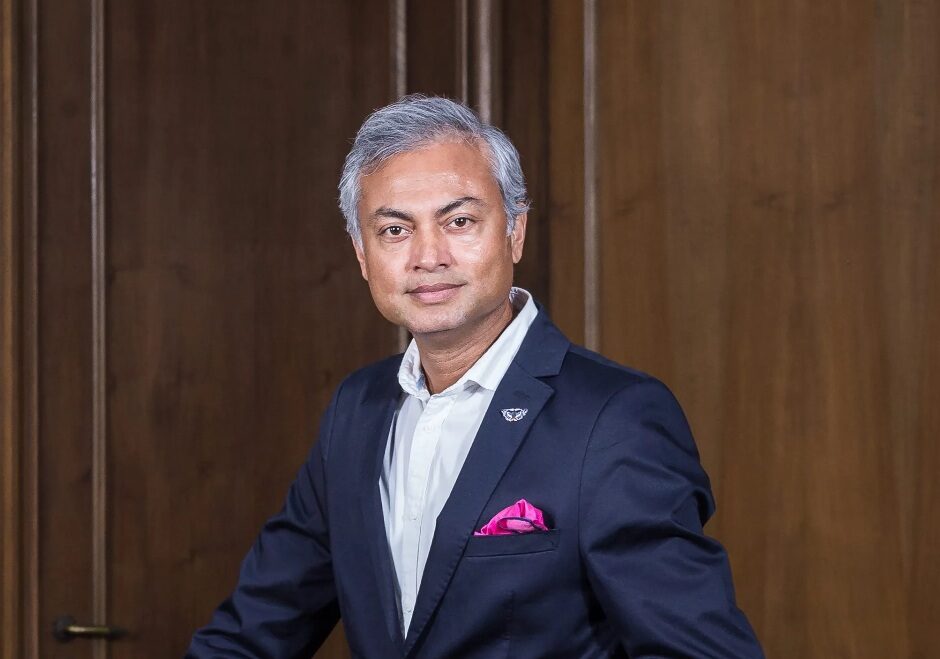
For decades, many associations across Asia-Pacific have looked to Europe and North America for ideas on governance, membership models and professional management. According to APSAE President Prasant Saha, that era is changing. The region is no longer merely adapting global best practices—it is reaching a point where it must define its own.
Speaking to Associations Commons, Saha argues that the creation of the Asia-Pacific Society of Association Executives (APSAE) is not simply about launching another industry body. Rather, it is about creating a platform that unites associations across different sectors to address common challenges and to strengthen the collective voice of one of the world’s most dynamic regions.
His reasoning begins with geopolitics. Asia-Pacific today represents a significant share of the world’s population and economic output, yet many organisations continue to look outward for direction. Saha believes the region has become overly dependent on Western narratives despite possessing the scale, diversity and expertise to shape its own future. At the same time, businesses within Asia often overlook opportunities to collaborate with one another, preferring traditional Western markets instead. APSAE, he says, aims to encourage greater regional cooperation and confidence.
Beyond geopolitics lies another equally pressing issue—the dominance of small and medium-sized enterprises across Asia-Pacific. SMEs and MSMEs make up the overwhelming majority of members in many industry associations, yet Saha believes their voices are frequently underrepresented. Leadership positions often remain concentrated among larger corporations, leaving smaller businesses with limited influence over the direction of their own industries. Creating more inclusive associations, he argues, is essential if they are to remain relevant.
Perhaps Saha’s most thought-provoking observation is the contrast between Asian and Western association models. In his view, neither approach is inherently better. Western associations have become highly sophisticated in generating non-dues revenue and building financially sustainable organisations. Asian associations, on the other hand, have traditionally been driven by purpose, volunteerism and service.
The challenge is that mission alone is no longer enough.
Without sustainable revenue, associations struggle to invest in research, leadership development, professional talent and future capabilities. They find it difficult to nurture the next generation of leaders or develop programmes that create lasting impact. “Mission needs fuel,” is effectively the message behind Saha’s argument. Associations must remain purpose-driven while developing the financial capacity to deliver on that purpose.
Equally concerning is the growing disconnect with younger professionals.
Asia-Pacific enjoys one of the world’s highest levels of smartphone and digital adoption, yet many associations continue to communicate using models developed decades ago. Younger professionals are already building communities through digital platforms and social networks, while associations—the organisations originally designed to build communities—risk becoming less relevant to the very audience they need most. For Saha, attracting younger members is not simply about recruitment; it is about redesigning the member experience around meaningful engagement, continuous learning and tangible professional value.
This thinking also shapes the programme for APSAE’s inaugural summit in Singapore. Rather than focusing solely on operational issues, the agenda addresses four strategic priorities that repeatedly surfaced during conversations with association leaders across the region: member retention, sustainable funding, governance and digital transformation.
Member retention requires associations to move beyond newsletters and annual conferences towards curated experiences that directly improve members’ professional capabilities. Funding requires moving beyond dependence on membership dues by creating services that members willingly pay for because they deliver measurable value. Governance demands stronger accountability, professional management and leadership renewal rather than concentrating authority within a small circle of long-serving office bearers. Finally, digital transformation—including the thoughtful adoption of artificial intelligence—must become an organisational capability rather than an afterthought.
Singapore, Saha believes, provides the ideal setting for this conversation. As home to many regional headquarters and recognised internationally for its transparency, accessibility and knowledge economy, it offers a natural platform from which APSAE hopes to build a stronger regional ecosystem.
Ultimately, Saha’s vision extends well beyond a single conference. His ambition is to professionalise association management across Asia-Pacific, strengthen governance standards and create an organisation capable of serving the region long after its founding leaders have stepped aside.
For Associations Commons readers, his message is clear: the future of Asia-Pacific associations will not be determined by simply replicating successful Western models. It will depend on whether the region can build associations that are financially sustainable, professionally managed, technologically capable, and deeply rooted in the unique strengths of Asia-Pacific itself.