

The rapid popularity of China’s latest artificial intelligence model has highlighted a new reality for AI developers: building a powerful model is only part of the challenge. Delivering it reliably to millions of users proves equally important.
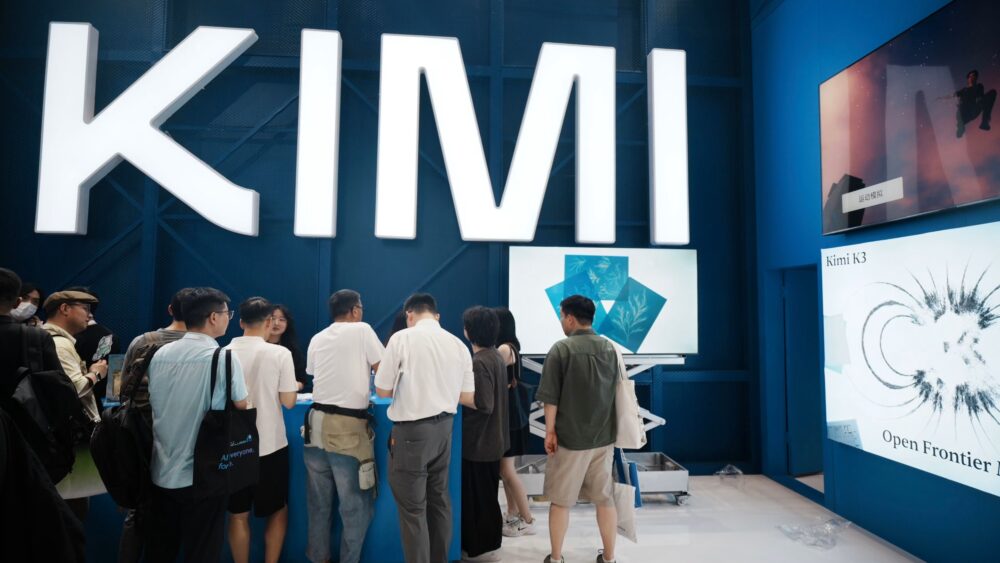
Beijing-based Moonshot AI temporarily suspended new subscriptions for its newly launched Kimi K3 after demand exceeded available computing capacity within 48 hours of release.
“Kimi K3 has received far more love than we expected,” the company said in a statement, adding that it was expanding computing capacity before reopening subscriptions in stages.
The announcement illustrates how the global AI race is increasingly shifting beyond model performance towards infrastructure, scalability and operational readiness.
With 2.8 trillion parameters, Kimi K3 has attracted attention as one of the world’s largest open-source AI models, competing with offerings from OpenAI, Anthropic and Google. However, industry analysts note that larger and more capable models also require substantially greater computing resources to serve users efficiently.
According to Lian Jye Su, Chief Analyst at Omdia, Moonshot AI’s challenge was less about technology failure than unexpectedly strong demand. High-performance AI models place significant pressure on computing infrastructure, making rapid scaling both technically complex and commercially expensive.
The episode comes amid accelerating competition across China’s AI sector. Earlier this year, DeepSeek attracted global attention by demonstrating that advanced AI models could be developed at significantly lower cost. More recently, Alibaba unveiled its Qwen3.8 Max model, while Z.ai introduced GLM-5.2, reflecting the pace at which China’s AI ecosystem continues to evolve.
For organisations adopting artificial intelligence, these developments reinforce an important consideration. Selecting an AI model is only one part of implementation. Reliability, scalability, infrastructure capacity and long-term support are becoming equally important factors as AI moves from experimentation into enterprise operations.
For associations, the rapid evolution of the AI landscape also highlights the growing need to help members understand emerging technologies beyond product announcements. As more models enter the market, organisations will increasingly require guidance not only on AI capabilities, but also on governance, implementation and practical deployment.
The experience of Kimi K3 suggests that in today’s AI race, success is no longer measured solely by how intelligent a model is, but determined by whether the infrastructure behind it can keep pace with demand.