


A major industry event can bring an ecosystem together, but its real value lies in what happens after the exhibition closes. SEMICON Taiwan offers a useful case study in how an association can turn shared industry challenges into structured collaboration, technical standards and longer-term roadmaps—and how to measure whether that collaboration actually delivers results.
TAIPEI — When SEMICON Taiwan opens in Taipei from 2 to 4 September 2026, more than 1,300 exhibitors will fill a record 4,300 booths. SEMI expects over 100,000 professionals from 65 countries, and more than 22 forums will address advanced packaging, memory, silicon photonics, smart manufacturing, cybersecurity and sustainability. Those figures demonstrate reach, but they do not prove ecosystem impact.
That distinction matters because the AI-chip race is no longer won by a single component or company. An advanced computing system may depend on chip designers, foundries, high-bandwidth memory suppliers, packaging specialists, equipment makers, materials companies, software providers and cybersecurity experts. Many compete commercially, yet they also need compatible interfaces, shared manufacturing practices and coordinated technology roadmaps. The Association Commons question is therefore not what SEMICON Taiwan displays, but how SEMI enables competitors to cooperate where no single member can solve a problem alone.
From Exhibition to Ecosystem Collaboration
The exhibition is the visible convening layer. Its AI Technology Zone, Memory Executive Summit, Chiplet Pavilion and Silicon Photonics Pavilion put different parts of the value chain into the same conversation. But forums cannot by themselves resolve thermal-management bottlenecks, testing gaps or interoperability failures. SEMI’s year-round architecture is what carries an issue forward. The question is how a three-day event fits into that architecture — and how a forum conversation becomes a lasting collaboration.
Turning Shared Problems into Action
SEMI’s answer rests on a deliberate decision pipeline. When a shared problem surfaces in a forum or technology community, members test it against two questions: does it create value across companies rather than for one, and does it remain pre-competitive — below the line of proprietary product design, process recipes and market strategy? Only if both hold does the issue enter the committee system, where experts form a task force, draft a specification, build consensus through a regional technical committee and use worldwide balloting to test global agreement. SEMI Taiwan reported 18 technical committees in 2025; the association globally runs more than 150 committees and task forces alongside technology communities and alliances. Crucially, the decision is not made unilaterally by SEMI’s secretariat — it is validated by members’ willingness to commit staff, time and funding, and an alliance’s founding cohort is itself evidence that the test was passed. This converts a shared problem into a neutral, repeatable process rather than leaving cooperation to informal networking.
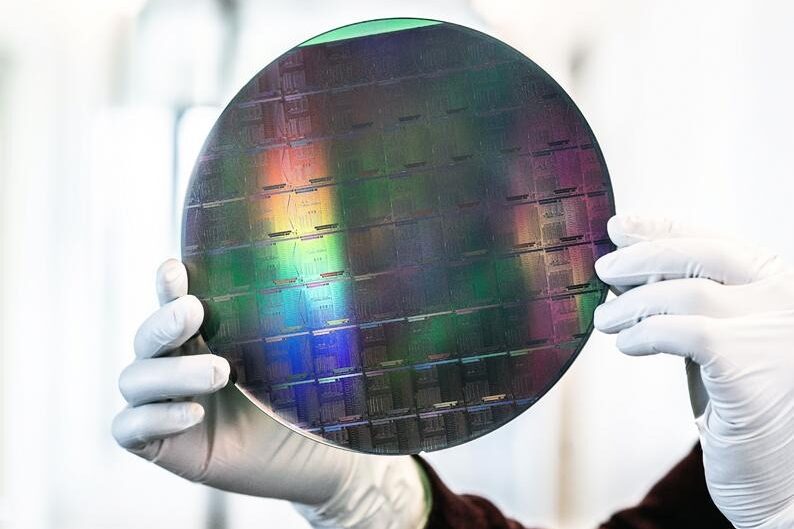
The clearest traceable example began at SEMICON Taiwan 2024. At its Silicon Photonics International Forum, SEMI announced the Silicon Photonics Industry Alliance, initially bringing together TSMC, ASE and more than 30 companies and research organisations. By April 2025 the alliance reported more than 110 partners and had launched three special-interest groups covering systems and components, advanced packaging and testing, and equipment. Members proposed regular cross-group meetings, a shared database, and a 2024–2027 technology blueprint to address the shift from 2D structures toward 2.5D and 3D integration. That work has returned to the 2026 event: the Silicon Photonics Global Summit is advised by the alliance and chaired by representatives from TSMC and ASE, while the pavilion spans design, photonic-electronic integration, packaging, co-packaged optics, and optical modules.
Traced through an AC Ecosystem Coordination Scorecard — problem identified, right stakeholders convened, common priority established, working group activated, roadmap or standard developed, collaboration initiated, adoption achieved, measurable outcome delivered — the silicon photonics story scores strongly on the first seven steps but weakly on the last. Publicly visible results remain: participation, structures, and roadmaps; SEMI has yet to report standards adopted, cross-company pilots completed, or bottlenecks removed. SEMICON Taiwan 2025’s launch of the 3DIC Advanced Manufacturing Alliance with 37 companies should be judged by the same logic, and future event coverage should hold SEMI to that standard.
For association leaders beyond the semiconductor industry, the lesson is straightforward. Exhibitors, booths, and visitors measure the size of a platform. The stronger measure is what the platform enables participants to accomplish together after they leave.