

Textile Exchange is replacing five material standards with one framework that touches more than 90,000 certified sites. The governance test is not whether the new standard is rigorous — it is who carries the cost of change.
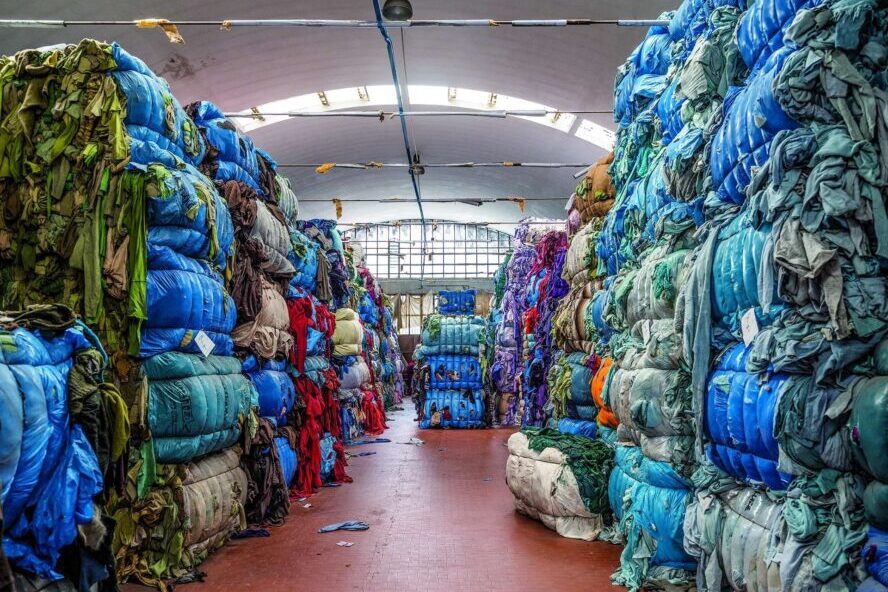
SINGAPORE — On 31 December 2026, one of the quietest forms of industry power changed hands in fashion supply chains. That is the date Textile Exchange’s Materials Matter Standard (MMS) becomes effective — the moment the mission-led non-profit begins folding five established standards into a single framework for raw-material production and primary processing. The Global Recycled Standard (GRS), the Recycled Claim Standard (RCS) and the Responsible Wool, Mohair and Alpaca Standards (RWS, RMS, RAS) will be absorbed into one set of criteria covering climate, nature, people and animals. Published on 12 December 2025, the standard became mandatory for all eligible Tier 4 audits on 31 December 2027, with legacy standards wound down through spring 2029 and legacy claims and labels migrated by 30 June 2029. By Textile Exchange’s own count, its certified network spans more than 90,000 sites.
The case for harmonisation is easy to state. Five standards meant five rulebooks, five audit protocols and five labelling systems for materials that increasingly move through the same supply chains. One standard means one set of expectations across land management, animal welfare, human rights and livelihoods, core production processes (water, chemicals, energy, waste, emissions) and traceability. For a brand buying certified wool one season and recycled polyester the next, the appeal is obvious: fewer moving parts, comparable data, simpler sourcing. But harmonisation has a cost side, and that is where the governance story begins.
Consultation Measures Participation. It Does Not Measure Agreement.
The development process reads like a model of inclusive standard-setting. An International Working Group (IWG) of brands, retailers, manufacturers, NGOs, suppliers and technical experts reviewed the public project plan. Two rounds of global public consultation ran in 2023, May to July for the first draft, October to November for the second. A pilot version followed in June 2024, tested through 11 field pilots in eight countries between August and November 2024, spanning recycling facilities in Prato, Italy, and alpaca producers in the remote Peruvian highlands. The final criteria were approved by an IWG vote on 2 June 2025, and Textile Exchange says the framework aligns with the ISEAL good-practice guidelines.
Participation, however, is not agreement. Consultation counts contributions; it does not reveal who prevailed when contributions conflicted. For any association running a standards project, the question that matters is the one the public record cannot answer: when brands, suppliers and civil society want different things, who ultimately decides?
The MMS record offers hints and open questions. Scope itself was a decision: organic cotton and down were kept out of the first version. The Organic Content Standard (OCS) and the Responsible Down Standard (RDS) continue under their existing frameworks, with organic cotton promising a phased transition that preserves its traceability function, sequencing, rather than force, was the resolution for contested territory. But other choices carry harder consequences. Under the transition policy, RCS-certified material is not eligible as an input into MMS-certified products, and recyclers moving from RCS to MMS can expect “a significant increase in environmental, chemical and social criteria.” Who pressed for that treatment, who opposed it, and how the IWG vote landed are not documented; they are questions for the people who were in the room.
“Consultation counts contributions; it does not reveal who prevailed when contributions conflicted. When stakeholders want different things, who ultimately decides?”
Who Pays for the New Rigour?
The MMS arrives with a visibly stronger assurance system. Certification bodies face new competency requirements, subject-matter experts, chemical assessment specialists, standardized audit teams, and must be accredited to the MMS by 1 July 2028 or enter a withdrawal process. Audits become risk-based: a risk assessment is now a pre-audit step that shapes audit planning, auditor competence, farm visits, sampling and surveillance. Every Tier 4 organisation is subject to a Human Rights & Livelihoods Risk Assessment grounded in the OECD Due Diligence Guidance and the UN Guiding Principles on Business and Human Rights. Textile Exchange is explicit that certification should not be treated as proof that a supply chain is free of human-rights risks.
The governing principle is proportionality, assurance effort proportionate to an organisation’s size, resources and operating context. On paper it is the right answer to the small-producer problem. But a principle is not a price list. Whether proportionality shows up in audit days, fees and documentation burden is exactly what a smallholder cannot tell from reading the standard.
The region where this becomes concrete is APAC, where animal-fibre supply chains run through China, Mongolia and India, and the recycled-textile hubs of India, China and Vietnam hold dense concentrations of GRS- and RCS-certified sites. Textile Exchange has published Chinese translations of the scope and transition policies alongside Spanish, a quiet signal of whose participation it expects to need. The transition mechanics are deliberately generous for mid-chain companies: Tier 0–3 organisations can update their scope certificates to MMS without an additional audit and can hold MMS and legacy scopes side by side during the transition. Tier 4 — farms, recyclers and primary processors, often the smallest and least formalised businesses in the chain — generally cannot hold MMS and legacy scopes in parallel, and face the new requirements head-on. And for small producers who access certification through group schemes, the picture is double-edged: group certification spreads cost, but the MMS also tightens oversight of group management systems, raising the bar for whoever holds the group together.
The Transferrable Question
The machinery will be familiar to anyone who runs an association. Textile Exchange is an unusually visible instance of a problem every standards-owning organisation faces: how do you introduce a higher common standard without unintentionally excluding the very stakeholders you need to bring along? The same question sits inside accreditation schemes, ESG reporting frameworks, professional standards and safety certification — anywhere the price of raising the bar falls disproportionately on the smallest participants.
Three design choices in the MMS are worth watching as the answer emerges. First, sequencing: a multi-year transition that keeps legacy standards valid during the change, so no certified site loses its status overnight. Second, proportionality: risk-based assurance that, in principle, directs effort where risk is highest rather than taxing every producer equally. Third, accessibility: translated policies, transition guides and a year of lead time before the mandatory date.
Whether those choices are enough is an empirical question the audit cycle will answer in who transitions by December 2027, who drops out, who absorbs the cost, and who was in the room when the criteria were voted. The consultation record says the standard was built with the industry. The harder question, who decided, and who pays, is still open. That is the story worth reporting.