
For Association Commons readers, the interesting story is not the environmental issues on SETAC’s agenda. It is how a professional association builds institutional channels through which specialised knowledge moves from laboratories into working groups, regulatory consultations, professional practice and, ultimately, collective action.
TSUKUBA, Japan — Environmental policy rarely suffers from a shortage of research. The harder problem is turning specialised evidence into a shared understanding that scientists, regulators and industry can use. When these groups use different terminology, standards of proof, and institutional priorities, a professional association can serve as the intermediary that keeps knowledge moving among them.
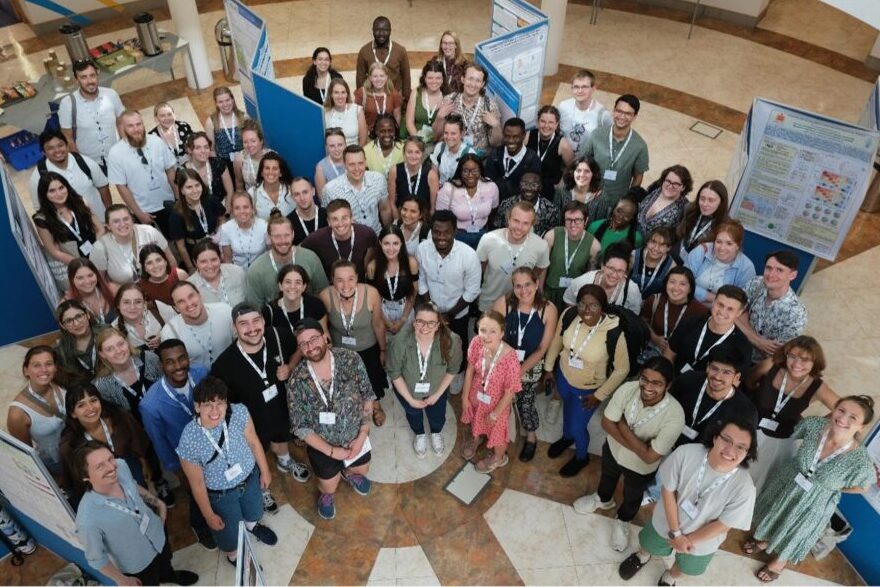
That role will be on display at the Society of Environmental Toxicology and Chemistry (SETAC) 15th Asia-Pacific Biennial Meeting in Tsukuba, Japan, from 20 to 23 September 2026. But for Association Commons, the question is not what will be discussed. It is: How does a professional association turn scientific knowledge into collective understanding – and collective understanding into action?
Scientific conferences generate presentations, posters, and networking. But none of these outputs automatically becomes guidance, regulation or professional practice. The gap between “research has been presented” and “research has been adopted” is where many promising contributions lose traction. SETAC’s approach acknowledges this gap from the outset. Its Scientific Committee spends months reviewing submissions and arranging them into themed tracks. Plastics, PFAS, and new risk assessment methodologies have emerged as major areas. This curation is the first form of translation: dispersed studies are grouped into conversations in which areas of agreement, uncertainty, and regulatory relevance become visible. This is not merely an administrative convenience, but a deliberate act of sense-making that prepares specialised knowledge for subsequent use by different stakeholders.
SETAC has built a layered system through which knowledge generated at meetings continues to develop, be debated, documented and eventually adopted. The Tsukuba meeting serves as both a showcase for current research and a launchpad for work that will continue through these mechanisms.
One of the most important mechanisms is the society’s interest groups. Under SETAC’s 2026 guidelines, these groups must engage their members online at least every two months and disseminate a significant work product – a webinar, book or paper – at least every two years. Groups are also encouraged to organise workshops, curate journal special issues and produce fact sheets. Their steering committees are expected to represent business, government and academia, keeping different users of the science inside the same working structure. These are not ephemeral conference side-events. They are ongoing communities of practice with defined expectations and deliverables, ensuring that the translation of knowledge is not a one-way transfer from researchers to practitioners but a continuous dialogue among all parties who will ultimately use or be affected by that knowledge.
Peer-reviewed publications provide another essential pathway. SETAC’s two journals – Environmental Toxicology and Chemistry and Integrated Environmental Assessment and Management – offer an editorial and peer-review route for research presented at meetings. This transforms conference presentations, which may be preliminary or incomplete, into vetted, citable and durable contributions to the scientific record. For regulators and industry practitioners, this peer-review process provides the quality assurance that raw conference papers typically lack, making the research more likely to be taken up in policy and practice.
Beyond publications, SETAC maintains direct channels to regulatory decision-making. Its Advisory Panel on Chemicals Management brings together experts from academia, business, government and civil society and has contributed to the development of the United Nations science-policy panel on chemicals, waste and pollution. In a separate consultation with the European Commission, input from more than 100 SETAC scientists was gathered to strengthen the scientific basis and practical use of the Safe and Sustainable by Design framework. These are concrete examples of how an association can aggregate and translate the expertise of its dispersed membership into a coherent input for governance.
International partnerships form another layer of SETAC’s institutional infrastructure. The Tsukuba programme includes a new memorandum of understanding with the Shanghai Society of Toxicology, which is expected to support wider participation by Chinese researchers. A dedicated International Board of Environmental Risk Assessors session will bring assessors from China and Japan together to discuss knowledge exchange and certification pathways. These arrangements provide the association with a framework for regional relationships that can extend beyond a single presentation. They are particularly significant in Asia-Pacific, where regulatory frameworks, industrial practices and scientific capacities vary widely across countries. By institutionalising these relationships, SETAC creates channels for cross-border knowledge transfer that do not depend on the biennial meeting cycle.
SETAC’s earlier work on life-cycle assessment illustrates what sustained translation can achieve over time. Its Pellston Workshops brought together experts from business, government, universities and non-government organisations to develop common methodological foundations. The resulting books and frameworks helped shape later work with the International Organization for Standardization, the US Environmental Protection Agency and the UNEP-SETAC Life Cycle Initiative. The lesson is not that every meeting should produce a standard, but that consensus requires a designed process, documented outputs and institutions able to continue the work. This precedent is directly relevant to the Tsukuba meeting. It demonstrates that SETAC has the institutional memory, credibility and methodological expertise to move beyond discussion and into standard-setting and practical guidance.
SETAC is also using the Tsukuba meeting to strengthen the next generation of its professional community. The programme includes students and early-career researchers, while sponsorship options allow organisations to support early-career scientists and delegates from developing countries. Across wider society, student presentation awards, mentoring and skills programs create routes for younger researchers to gain visibility, build networks and gain leadership experience. This generational dimension is often overlooked in discussions of scientific knowledge translation. Research findings do not implement themselves. They are implemented by professionals who understand the evidence, trust the sources, and have the practical skills to apply them. By deliberately involving early-career participants, SETAC is not only training individual scientists but also ensuring that the professional community itself has the capacity to carry knowledge forward across decades.
Tsukuba will generate presentations, debate and new contacts. Its longer-term value will depend on whether those inputs move into working groups, publications, consultations, professional practice and future collaboration. That is the broader association lesson: a conference can introduce evidence, but an association must build the channels through which evidence becomes collective understanding and collective understanding becomes action. SETAC has built those channels – peer-reviewed journals that validate research, advisory panels that connect scientists to regulators, interest groups that sustain collaboration between meetings, international agreements that enable cross-border knowledge transfer, and early-career programmes that ensure professional succession. The Tsukuba meeting is not the endpoint of that system. It is a moment within it – a gathering that will feed new research, new questions and new relationships into the ongoing work of translation. Whether those inputs lead to regulatory guidance, industry practice or international standards will depend not on the conference itself, but on the institutional infrastructure that SETAC has built and continues to maintain.