

MELBOURNE – Nearly four decades ago, an animal product safety crisis forced Australia’s rendering industry to prove that its products could meet consistent standards. Its industry association responded not only with advocacy, but with operating codes, accreditation and training.
In 2026, the challenge is markedly different. The industry is no longer being asked only to prove hygiene and safety; it is increasingly expected to demonstrate carbon intensity, traceability and sustainability. The Australian Renderers Association (ARA) is once again attempting to turn an industry claim into something measurable.
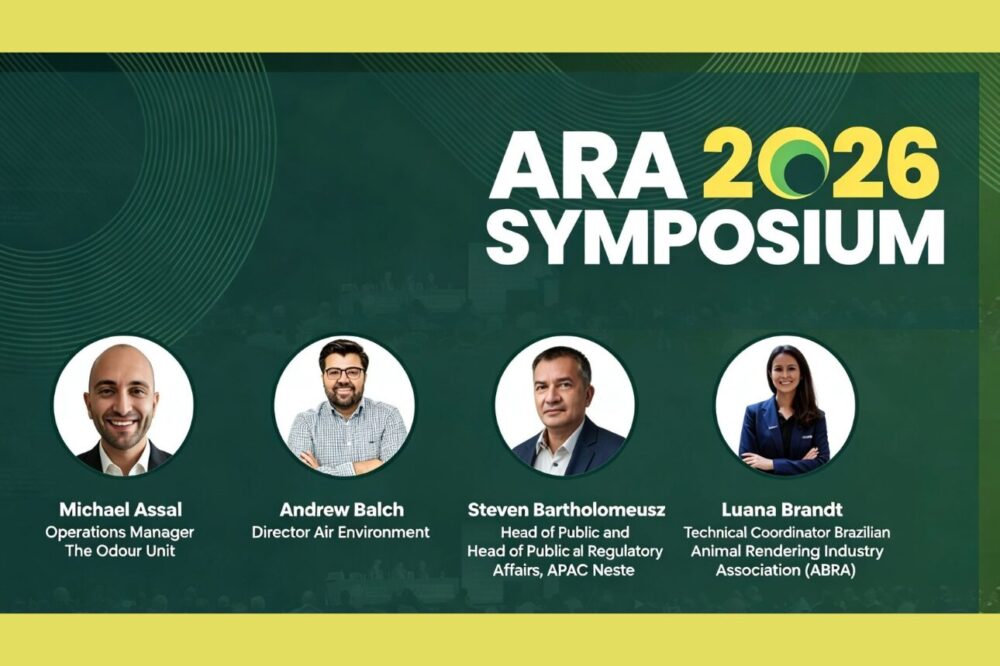
This repositioning will be a central theme of the 18th ARA International Symposium, to be held at the Melbourne Convention and Exhibition Centre from 15 to 17 September 2026 under the theme ‘Aligning Industry with Purpose’. Companies, regulators, researchers, technology suppliers, buyers and international representatives will examine how sustainability, renewable fuels and global trade are reshaping the sector. For Association Commons readers, however, the more important question is not the symposium itself. It is how an industry association can turn a one-off conference into permanent infrastructure capable of repositioning an entire industry.
The Legacy of a Health Crisis: How an Association Turned Disaster into Institutions
ARA’s history shows that this is not its first attempt to build an industry legacy. Founded in 1976, the association initially focused on freight costs, government regulation and export restrictions. Its role later expanded from trade representation to industry standards, accreditation, education and technical capacity building.
The bovine spongiform encephalopathy (BSE) crisis that emerged in Britain in the late 1980s became a critical turning point. As markets questioned the safety of rendered products, ARA moved beyond advocacy by developing a Code of Practice for hygienic rendering and introducing accreditation training. The code was later aligned with Australia’s national standards system, while the training programme gave processing facilities a practical mechanism for applying its requirements. Over the past 35 years, the accreditation programme has trained more than 1,200 people, creating a legacy less visible than a major event but potentially more enduring: professional knowledge that continues to move across companies, roles and generations.
This history is critical to understanding ARA’s current strategy. It shows that the association has a core capability: when the industry faces a crisis of market confidence, ARA can move beyond lobbying to build systems of standards, accreditation and skills that lift operating benchmarks across the sector. That capability lends credibility to the current sustainability transition.
From Waste Management to Circular Resource Infrastructure
The environmental value of rendering begins with scale. According to ARA, Australia processes more than 2.7 million tonnes of animal by-products each year, converting them into raw materials and intermediate products for pet food, animal feed, fertiliser, cosmetics, biofuels and industrial applications. By keeping these materials in the supply chain, the industry is changing how its role is understood. Renderers do more than manage waste; they keep the carbon, energy and protein contained in those materials in productive use, connecting food production with manufacturing, agriculture and energy markets.
Growing demand for low-carbon fuels is making this transition increasingly commercially significant. As the world’s largest exporter of tallow, Australia exported about 650,000 tonnes of tallow and recycled used cooking oil in 2025. These materials are already being used as feedstocks for renewable diesel and sustainable aviation fuel. The Australian Renewable Energy Agency has recognised their role in renewable fuel production, while projects in Brisbane and other locations are assessing their commercial application. This gives ARA greater scope to participate in policy discussions. Rendering need not remain only a downstream service provider to the food industry; it can position itself as an upstream feedstock supplier to emerging low-carbon industries and participate in debates on fuel security and aviation decarbonisation.
However, this new identity will also bring closer scrutiny. Fuel buyers increasingly require reliable data on carbon intensity, traceability and sustainability. Recovering a material does not automatically make it sustainable; its environmental value must be measured and verified through supply-chain data. The industry’s circular-economy claims will create commercial value only when buyers, governments and investors trust the evidence behind them.
The Sustainability Framework: A Bridge Between Narrative and Evidence
ARA plans to formally launch its Sustainability Framework at the 2026 International Symposium, a move with significant strategic implications. The framework could shift the industry from a broad resource-recovery narrative towards a shared evidence system, giving members practical tools to measure greenhouse gas emissions, energy and water use, resource recovery rates and product traceability.
ARA has already shown that it can turn an industry crisis into standards, training, accreditation and international activity. The Sustainability Framework, however, remains a plan – a promising one, but one that has not yet been tested through implementation. Its real value will depend on the answers to several critical questions:
- How many members will actually adopt the metrics?
- Will reporting be voluntary?
- Will the results be comparable?
- Will customers and regulators recognise the framework?
- Who will verify the data?
- How often will the framework be updated?
If the framework ultimately becomes market infrastructure by creating a shared language trusted by buyers, regulators and investors, it could have a more enduring impact than any single symposium. For Association Commons readers, the case shows that the value created by a specialist industry association lies not only in solving members’ immediate problems. It also lies in building shared language, industry data and professional standards that enable an entire sector to enter new markets.
International Networks: From Event Guests to Institutional Relationships
The international reach of the ARA International Symposium is expanding. The 2024 event attracted more than 390 delegates, including 83 international participants from 13 countries. The 2026 programme will feature speakers from the World Renderers Organization and relevant associations in Brazil, North America and New Zealand. It will also host an interim meeting of the World Renderers Organization and an international forum.
ARA appears to be moving from participating in international conferences to building a year-round network that supports technical exchange and market access. For a highly specialised industry association, these relationships can promote technical cooperation, common standards and entry into overseas markets – outcomes that individual member companies may struggle to achieve alone. The connection with the Sustainability Framework is clear: if Australian standards and metrics are recognised by international buyers, the system itself becomes an export-promotion tool.
The Legacy Test: What Happens After the Symposium
ARA’s current task is to connect its established legacy in hygiene and product safety with a new legacy centred on sustainability. Earlier generations of industry leaders built market confidence through common safety standards. The next stage will require an equally influential system for carbon emissions, resource efficiency and low-carbon supply chains.
The 2026 International Symposium gives ARA an opportunity to change perceptions of a sector commonly associated with waste, presenting it instead as a supplier of products and feedstocks to animal nutrition, manufacturing, renewable diesel and sustainable aviation fuel markets. Changing the narrative alone, however, will not be enough. The industry needs data that can withstand scrutiny, a sustainability framework that members can implement in practice and international relationships that continue after the symposium ends.
The most meaningful legacy should be measured by what happens after the symposium: members adopting consistent sustainability metrics; companies entering low-carbon fuel supply chains; international partnerships producing tangible technical or commercial results; and policymakers formally recognising rendering as part of Australia’s circular-economy infrastructure. ARA’s history has shown that it can turn an industry crisis into standards, training and market credibility. The next test is whether it can turn the sustainability transition into an equally durable legacy – one that changes not only how people describe the industry, but also the industry’s position in the economic system.
Nearly four decades ago, the rendering industry’s challenge was to prove that its products could be safe. ARA’s response was more than a communications campaign; it built standards, accreditation and skills that outlasted the crisis itself. Today, the challenge is to prove that rendering can credibly support a low-carbon circular economy. The same principle still applies. Calling an industry sustainable does not make it sustainable. An association’s role is to build the standards, evidence, skills and market confidence that make the claim credible.
If ARA’s Sustainability Framework is ultimately adopted by members, recognised by customers and trusted in international markets, the legacy of the 2026 symposium will not be another discussion about sustainability. It will be an industry that has changed both the way it operates and the way the economic system values its contribution.