

Every board eventually has to decide how much power to let one leader accumulate, and for how long. Long tenure is not the only succession risk a board has to manage. The opposite failure mode, a chairmanship that never rotates because no clear internal pathway exists to the next leader, is just as common, and it tends to surface only when a long-serving chair finally steps down with no obvious successor in place. One of Asia’s oldest business chambers has built its governance specifically to avoid that problem.
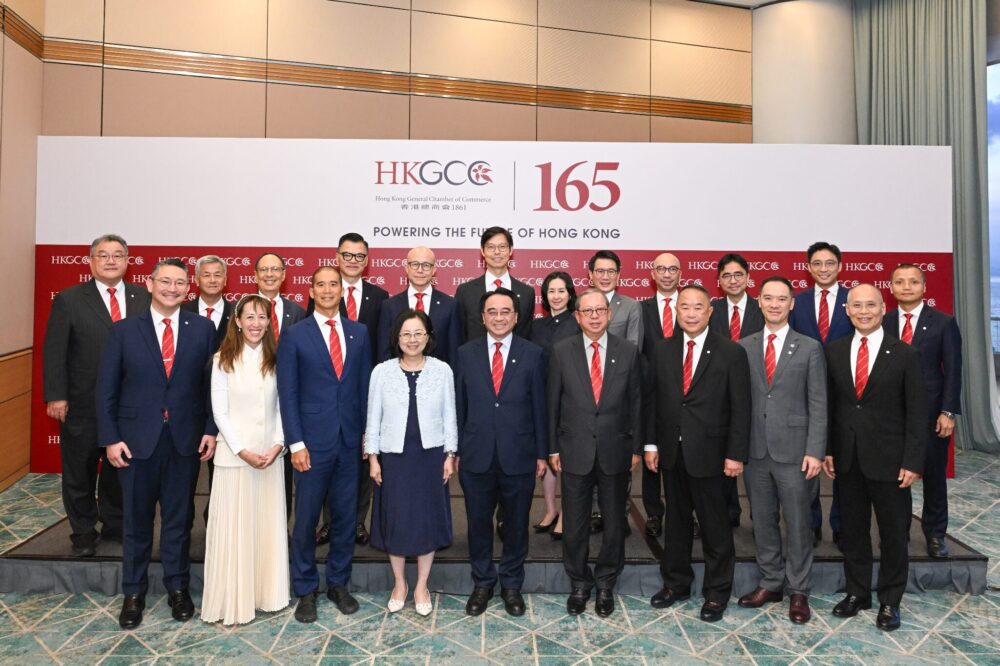
The Hong Kong General Chamber of Commerce (HKGCC), founded in 1861 and marking its 165th year in 2026, elected Jacob Kam, Chief Executive Officer of MTR Corporation, as Chairman for the coming year, according to the Chamber’s own announcement. Kam previously served as HKGCC’s Vice Chairman and took over from Agnes Chan, who stepped down after serving the maximum two consecutive one-year terms. Kam said he was honoured to be elected and pledged to work with members, the business community and the government to strengthen Hong Kong’s competitiveness, pointing to the Greater Bay Area’s integration and emerging Belt and Road markets as sources of growth.
The structure behind this transition does most of the governance work before any individual chairman is even selected. HKGCC’s chairmanship rotates through one-year terms, renewable once, drawn from a General Committee of 25 senior business figures who serve as the pool from which Vice Chairmen and eventually the Chairman are elected. That pipeline means an incoming chair has typically already served in a visible, accountable leadership role within the organisation before taking the top seat, and no single leader can occupy the chairmanship for more than two years regardless of how effective or popular they are.
The trade-off is real: annual rotation limits how long any one chair can pursue a multi-year strategic agenda, and Hong Kong’s chamber offsets this by keeping continuity elsewhere, permanent secretariat staff, a standing General Committee, and an advisory Chamber Council made up of former chairmen who continue advising on policy after their term ends.
For associations weighing how much power to concentrate in a single leadership term, HKGCC’s model offers a specific structural answer: cap the top role’s tenure by rule rather than convention, build a visible internal pathway (vice chair to chair) so succession is never a surprise, and preserve institutional memory through a standing body of past leaders rather than relying on the outgoing chair’s personal handover.
AC Perspective: HKGCC’s model is a useful counterweight to the assumption that longer tenure automatically means stronger leadership. A capped, rotating chairmanship trades long-term personal vision for structural predictability; no member ever has to wonder who comes next, because the pathway is already built into the organisation. Associations do not need to adopt a strict one-year term to learn from this, but the underlying discipline transfers directly: name a visible deputy role, treat it as genuine preparation for the top seat rather than a ceremonial title, and decide deliberately, rather than by default, how long any one leader should be able to hold power before the organisation is meant to test a new one.