

Leadership transitions are among the most important tests of an association’s governance. While every organisation will eventually experience a change in leadership, the difference between a smooth handover and organisational disruption is rarely determined at the moment a successor is appointed. It is determined years earlier, by whether succession planning has been built into the board’s governance practices.
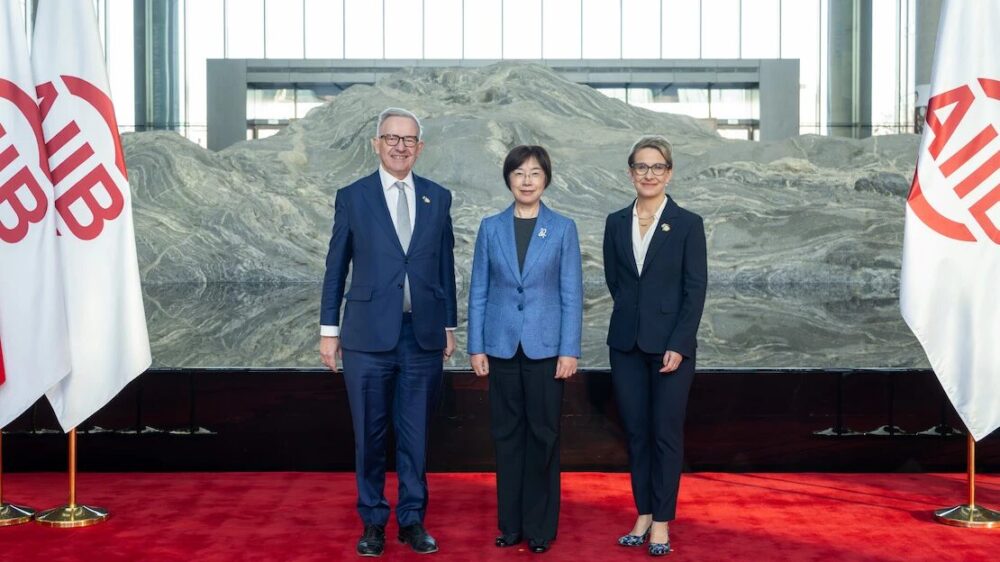
The recent leadership transition at the Asian Infrastructure Investment Bank (AIIB) offers a useful example. Zou Jiayi formally assumed the presidency after founding President Jin Liqun completed his second five-year term. Rather than waiting until the transition date, AIIB’s Board of Governors elected Zou seven months in advance, creating a structured handover period that allowed leadership continuity to be managed deliberately rather than reactively.
Headquartered in Beijing, AIIB comprises 111 member countries and is capitalized at US$100 billion. In her first address to staff, Zou reaffirmed the bank’s mission of advancing development through “practical cooperation, purposeful investment” and improving lives, signalling continuity rather than a shift in strategic direction.
The transition reflects a governance model where leadership succession is treated as an ongoing institutional responsibility instead of an event triggered by an impending departure. Fixed presidential terms provide a predictable timeline, allowing boards to identify successors, manage knowledge transfer and maintain stakeholder confidence long before a leadership vacancy arises.
Association boards need not operate under fixed-term constitutions to adopt the same discipline. Regular succession reviews, leadership development and defined transition periods can all help reduce organisational risk while preserving strategic momentum. By embedding succession planning into routine governance, boards are better positioned to focus on the organisation’s future rather than managing uncertainty when leadership changes occur.
AC Perspective
AIIB’s leadership transition is noteworthy precisely because it appears uneventful. Effective succession planning rarely attracts attention because continuity has already been designed into the organisation. For association boards, that is perhaps the strongest measure of success. Succession planning should not be viewed as an occasional HR exercise or a response to an announced retirement. It is a continuing governance responsibility that strengthens organisational resilience, preserves institutional knowledge and gives members confidence that leadership transitions will not interrupt the association’s long-term mission.