

Bangkok’s combined plastic surgery and craniofacial congress brings several professional communities into one programme. Its wider value depends on whether shared sessions become sustained cooperation across the patient care pathway.
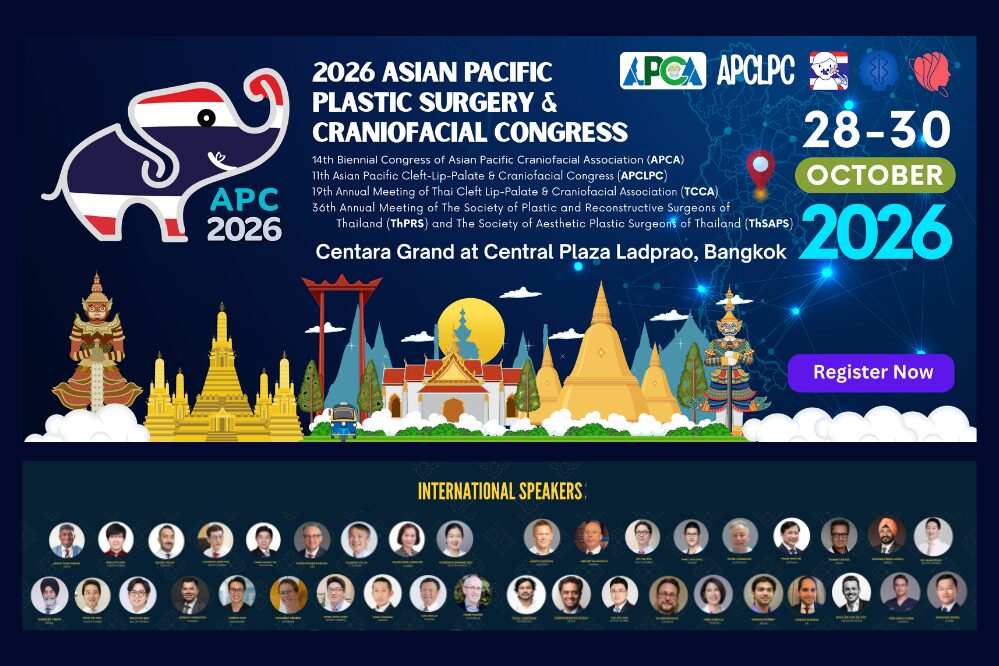
Bangkok, Thailand — The 2026 Asian Pacific Plastic Surgery & Craniofacial Congress will take place on 28–30 October at Centara Grand at Central Plaza Ladprao, Bangkok. It brings the 14th Asian Pacific Craniofacial Association congress into a wider gathering of regional and Thai professional organisations, making collaboration part of its operating structure.
For association leaders, the meeting is a useful case in managing a shared platform. Combining events can bring complementary expertise into contact and broaden participation, but its success depends on more than placing several society names on a programme. Each community needs a clear role and a reason to remain engaged.
Leadership through a Coalition
Associate Professor Chalermpong Chatdokmaiprai is the president of the organising committee. APCA President Nond Rojvachiranonda also extends an invitation through his association. The collaboration includes APCA, the Asian Pacific Cleft-Lip-Palate & Craniofacial Congress, the Thai Cleft Lip-Palate & Craniofacial Association, and Thailand’s reconstructive and aesthetic plastic surgery societies.
The honorary lecture will be delivered by Professor Charan Mahatumarat, with specialist contributors including Professor Ellen Wen-Ching Ko on orthodontic care and Dr Tim Bressmann on voice and nasality assessment. Suteera Pradubwong is scheduled to address the development of cleft nursing care in Thailand.
This leadership mix places technical expertise alongside the professionals supporting longer-term recovery. For management teams, it also creates a governance task: agreeing programme authority, financial responsibilities and the treatment of each partner’s identity.
Programming Across the Care Pathway
The published structure uses parallel plastic surgery, cleft and craniofacial, and research presentation streams. It combines plenary lectures, specialist symposia, free papers and e-posters, alongside society business meetings and social functions. The combination allows technical learning and organisational work to take place within the same gathering.
Selected sessions cover surgery, orthodontics, speech, nursing and psychosocial care. Technology discussions include AI-assisted planning and digital tools in cleft care. The programme also includes patient and family perspectives. These are important distinctions: successful treatment cannot be understood only through the procedure performed in an operating theatre.
The congress’s unique proposition is therefore the breadth of its professional connections. An association can use that breadth to identify where members depend on other disciplines and where separate educational traditions may leave gaps. It provides a basis for designing future joint work around the patient journey rather than the boundaries of individual societies.
The Risk of Parallel Professional Conversations
A multi-stream programme does not guarantee interdisciplinary exchange. Delegates can remain within familiar sessions and leave with little exposure to neighbouring disciplines. Association executives considering a similar model should examine where the agenda actually requires shared discussion, rather than assuming co-location creates collaboration.
One useful approach would be to organise follow-up around a specific care problem with contributions from several professions. A clinical team could then identify what each discipline needs from the others and where communication fails. Such work would complement technical presentations without requiring every participant to become an expert in every subject.
Joint governance also needs to protect balance. A larger or better-resourced partner can unintentionally dominate visibility, scheduling and sponsorship. Transparent decision rules and an agreed account of what each society contributes would help the collaboration remain attractive beyond a single congress cycle.
Measuring a Plausible Clinical Legacy
The published materials demonstrate an interdisciplinary programme, but do not confirm a funded cross-border legacy project, new regional standard or subsequent improvement in patient outcomes. The credible legacy claim at this stage is the potential to strengthen relationships and professional capability.
That potential can be assessed through specific follow-up: continuing education delivered jointly, new mentoring links, or participating institutions working together on an agreed question. Any claim about better care would need appropriate clinical evidence and a timeframe that reflects how treatment and recovery unfold.
A shared post-congress review could compare what each partner expected with what its members experienced. That would give organisers evidence for the next joint edition and help identify whose voice was missing. Including allied professionals in that review would be particularly relevant to a programme that presents multidisciplinary care as a central strength.
For association boards, the strongest lesson is that a joint congress can become a platform for cooperation when its governance and educational design support the same purpose. Bangkok’s programme brings the relevant professions into one setting. The next test is whether the participating bodies create an enduring structure through which those connections can improve practice.