
Most governance frameworks for associations ask the same basic question: does the organisation have the right policies, procedures and controls in place? What fewer frameworks ask is whether the people responsible for executing those policies actually have the capability to do so. Singapore’s newest framework draws that distinction explicitly, and in doing so raises a question that most association boards have not formally examined.
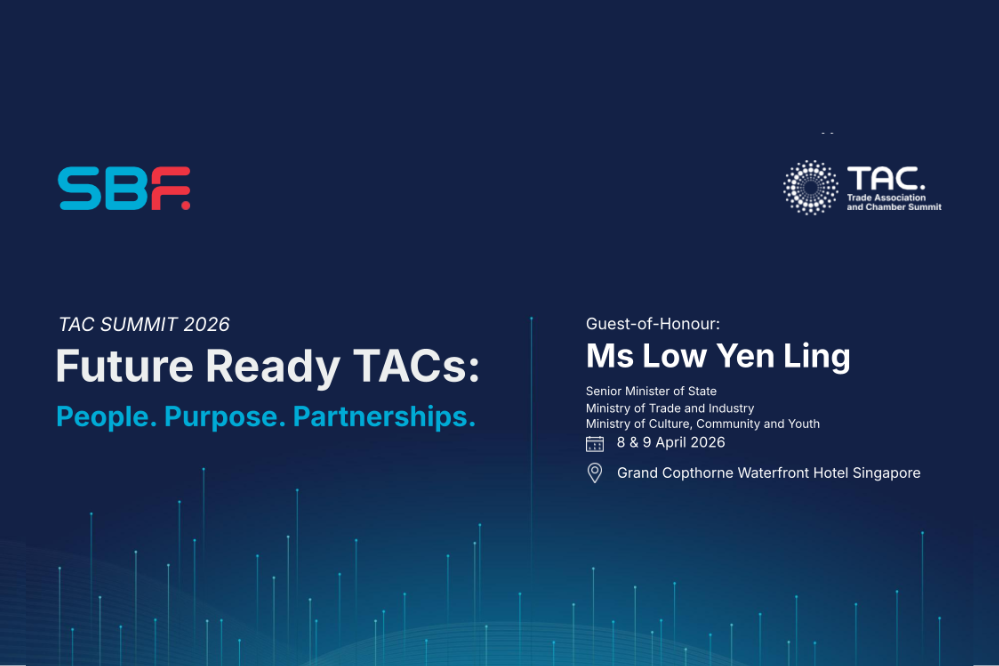
Enterprise Singapore launched the Trade Association and Chambers (TAC) Measurement Framework in April 2026, developed with input from more than 60 trade associations and chambers, in collaboration with PwC Singapore. The TMF adds six new capability pillars to Singapore’s existing governance framework: Leadership, People and Organisation Change, Financial Stability, Industry Standing and Track Record, Value Proposition and Technology. Associations complete a holistic self-diagnostic across all seven pillars and receive a structured readout of which areas need development. The launch was announced by Senior Minister of State for Trade and Industry Low Yen Ling at the TAC Summit 2026.
The structural choice worth examining is how the framework separates Governance from People and Organisation Change. Governance covers policies, procedures and procurement controls. People and Organisation Change covers something distinct: the secretariat’s staffing capacity, internal processes, training and organisational development. The two sit side by side, neither subordinate to the other. A board can have comprehensive governance policies on paper while the secretariat responsible for implementing them lacks the headcount, training or systems to do so consistently. Under a framework that folds both into a single score, that gap may never surface. Under a framework that assesses them separately, it has nowhere to hide.
The Value Proposition and Technology pillars extend the same logic. An association can be well-governed and financially stable even if its member value proposition has not been examined against what members actually need today, or if its technology infrastructure has not kept pace with how members expect to engage. The TMF treats both as distinct capabilities worth assessing on their own terms.
For secretariat teams, this represents a structural shift. A capability gap in People and Organisation Change is no longer a soft internal request for more resources. It is a gap identified in a government-developed assessment framework, which changes the weight of the conversation when it reaches the board.
The practical test is worth applying regardless of whether your organisation is subject to the TMF. Separate your last governance review from your last honest assessment of secretariat capability. A board that cannot distinguish between whether its policies are adequate and whether the team executing them is adequately resourced is working from an incomplete picture of its own organisational health.