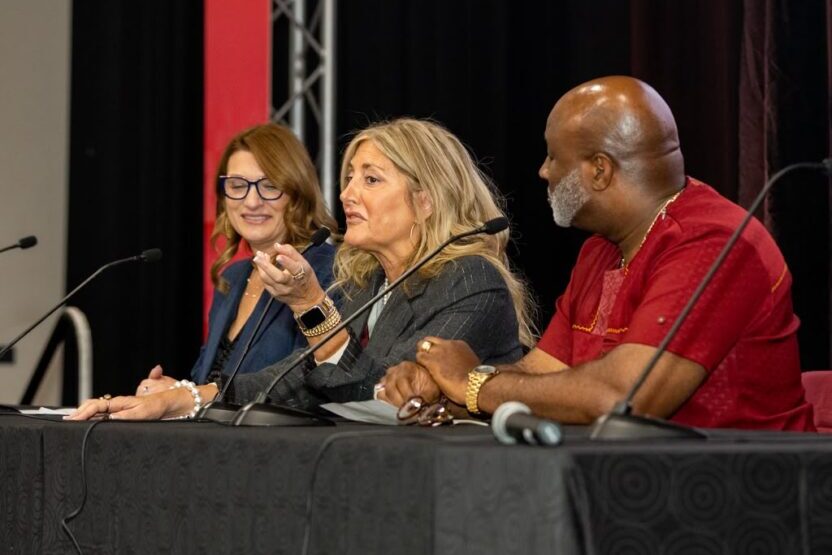

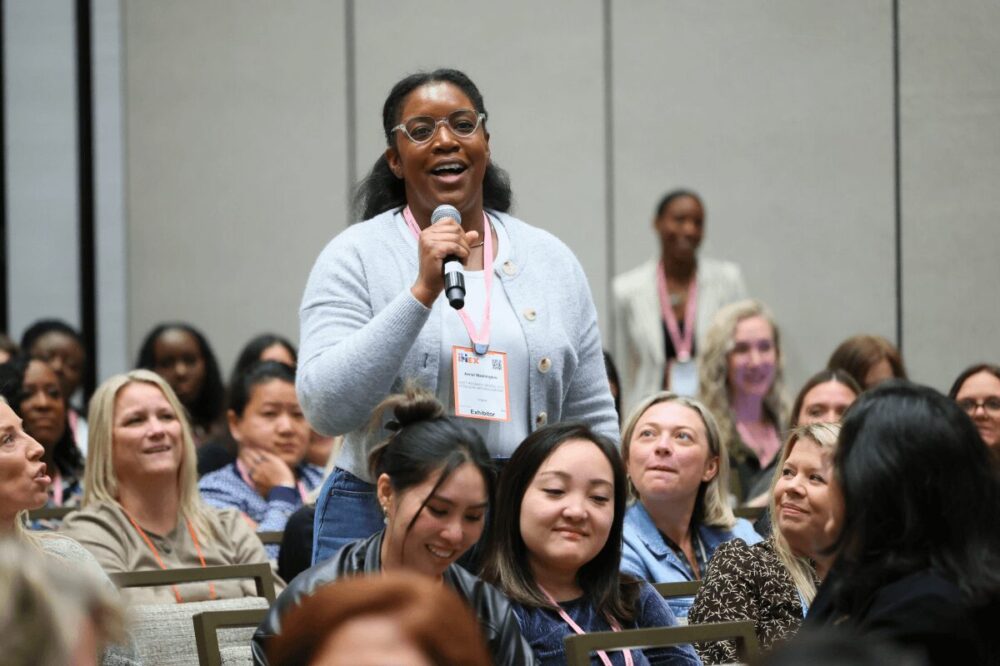
Learning and discussion at Smart Monday ahead of IMEX America 2026. Image source: IMEX’s press release.
Singapore’s contribution to IMEX America’s inclusion discussions offers association leaders a practical example of bringing underrepresented stakeholders into the programme and giving informal engagement more room.
IMEX America, Las Vegas, USA — Singapore’s approach to inclusive congress design came into focus during Smart Monday at IMEX America, with an example linking stakeholder participation directly to conference content.
Carrie Kwik, Executive Director, Conventions, Meetings and Incentive Travel at Singapore Exhibition & Convention Bureau, described how an International Farmers Network Forum brought small-scale farmers into the Cocoa Association Asia conference. According to IMEX’s account, insights from the forum helped shape the main programme, giving those participants a stronger voice in the overall event.
For association leaders, the example raises a useful question: whose experience is needed to make the congress relevant, and how does that experience reach the main discussion?
Designing Participation Before Issuing Invitations
Inviting a stakeholder group is an initial step. The association must also decide how participants can contribute and how their input will influence the agenda. A separate forum can provide space for people to discuss issues in terms familiar to them before their findings enter a wider professional conversation.
The Singapore example suggests a practical sequence for organisers to consider: identify missing perspectives, create a suitable setting for discussion and connect the contributions with the congress programme. Its value lies in that connection. Associations adopting a similar approach should explain to participants how their input will be used and provide feedback afterwards.
Allowing Time for Cultural Connection
Kwik also highlighted food as a setting for engagement and business relationships in Asia, suggesting that planners consider lunch breaks of 90 minutes. The point formed part of a wider discussion about how culture and demographics affect participants’ experience.
For a congress committee, the implication is to examine the timetable alongside the content. Informal time gives delegates opportunities to ask questions, renew relationships and meet people outside their immediate professional circle. Whether a longer lunch is appropriate will depend on the audience and programme, but the decision should reflect how that audience prefers to connect.
Examining Who Finds It Easy to Contribute
Association organisers can apply the same reasoning to discussion formats. A senior practitioner comfortable speaking in a plenary session may participate differently from a first-time delegate, a younger member or someone attending in a second language.
Smaller discussions, clear questions and facilitation are options worth considering when committees want a broader range of contributions. The choice should follow the intended outcome. If the purpose is to hear from a group with limited representation, organisers should give that group a realistic route into the conversation and enough context to participate.
Connecting Inclusion with Association Decisions
The leadership task is to establish what happens to the contributions after the meeting. Input might inform future education, a research priority or a position under consideration by the association. Those uses should follow the organisation’s established decision processes.
A committee can strengthen accountability by identifying who will review the input and how contributors will learn what happened next. This also helps distinguish a consultation from a formal decision. Participants should understand the role their contributions play without being promised influence that the congress cannot deliver.
This review can begin with the existing congress rather than require a complete redesign. Committees could examine speaker selection, consultation arrangements and the time available for discussion, then choose a specific change to evaluate. A focused adjustment gives organisers a clearer basis for learning what works for their particular community.
Making the Congress More Representative
Singapore’s example is relevant to associations seeking a closer connection between their meetings and the communities their professions serve. It offers a concrete starting point for reviewing representation across the programme.
The questions are straightforward: who is missing, what would help them contribute and where will their knowledge be used? Answering them during programme planning could produce a congress that hears a wider range of experiences and makes those experiences useful to members.