
How often should an association bring its members together for its flagship event? IFAC’s decision to move the World Congress of Accountants to a biennial cycle offers a timely case study in balancing industry change, member demand, event economics and the time needed to turn conference discussions into measurable progress.
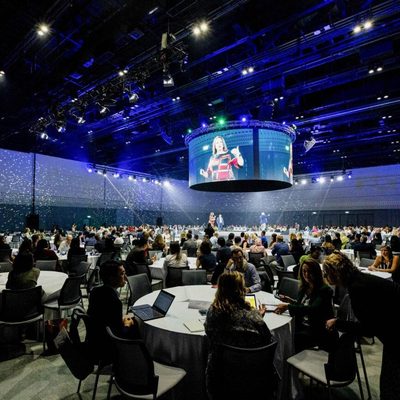
SEOUL, South Korea — When more than 600 accountancy leaders and stakeholders gather for the World Congress of Accountants in Seoul from 17 to 19 November 2026, the most consequential change may not be found on the programme. It will be found on the calendar.
The International Federation of Accountants (IFAC) and the Korean Institute of Certified Public Accountants will jointly host the invitation-only physical event, with selected sessions livestreamed publicly. The programme includes agentic AI demonstrations, professional transformation, global standard-setting, talent and sustainability. However, WCOA 2026 also launches a new biennial format, reducing the interval between congresses to two years.
This represents a clear break with WCOA’s recent history. IFAC has noted that the congress was held every five years from 1977 and every four years from 2002. The recent sequence—Kuala Lumpur in 2010, Rome in 2014, Sydney in 2018 and Mumbai in 2022—followed that four-year rhythm. IFAC introduced the new format when Seoul was selected on 25 August 2025, and announced that Cape Town will host WCOA 2028.
Why the Change in Rhythm?
What remains unclear is why two years was judged the right interval. IFAC’s announcement emphasised the need for a resilient and adaptable global profession facing sustainability, AI and talent challenges. It also confirmed that WCOA would continue to coincide with IFAC’s Annual Council Meeting. Yet the public explanation does not compare a two-year congress with annual, four-year or digitally supported alternatives, nor does it state how IFAC will measure success. IFAC did not respond to requests for comment for this article, and its public communications do not take the rationale beyond this point.
That missing rationale is the real Associations Commons story. A faster cycle could help IFAC and its member organisations revisit rapidly developing issues before conference content becomes outdated. Agentic AI, for example, is moving too quickly for a four-year discussion cycle. Bringing professional bodies, regulators, standard-setters, firms and investors together more frequently could accelerate shared learning and coordination.
The Cost of Going More Often
Frequency, however, does not automatically produce responsiveness. A congress every two years can create an event-planning treadmill in which IFAC, each host organisation and participating member bodies begin preparing for the next gathering before they have implemented the previous one’s conclusions. More frequent physical events also require greater spending, staff capacity, host support and international travel. Scale is part of the economics: past congresses drew thousands—Rome hosted more than 4,000 in 2014 and Sydney more than 5,000 in 2018—while WCOA 2026 is a 600-participant, invitation-only gathering that changes the cost and revenue structure for hosts and sponsors. For participating member bodies, a faster cycle doubles how often they must budget for travel, staff time and delegation attendance at a moment when many professional accountancy organisations face resource pressure. Without clear priorities between congresses, additional activity may consume resources without increasing impact.
Making the Biennial Model Work
The critical test is therefore what happens between Seoul and Cape Town. IFAC’s WCOA page describes the 2026 programme, livestreaming and the 2028 host, but does not set out a congress-to-congress implementation mechanism. A biennial model will be more persuasive if WCOA 2026 ends with a limited set of agreed priorities, named owners and measurable outcomes. IFAC and its member organisations could then publish progress updates before returning in 2028 to assess what changed.
By 2028, success should be visible beyond attendance, online viewing, or delegate satisfaction. Relevant indicators could include actions adopted by professional accountancy organisations, new collaboration between jurisdictions, changes to member education or AI guidance, progress on sustainability and ethics priorities, and evidence that WCOA discussions influenced IFAC’s wider work. Financial performance also matters: the additional value created must justify the resources required from IFAC, hosts and member bodies.
Beyond the Physical Congress
The hybrid design creates another test. Livestreaming selected sessions extends access beyond the 600-plus invited participants, but broadcasting is not the same as year-round engagement. IFAC must determine which conversations require a major physical gathering and which can continue through digital forums, regional networks and member-led working groups. A successful rhythm should connect these channels rather than make the congress compete with them.
For association leaders, the WCOA case suggests a practical flagship-event cadence diagnostic. The decision should consider the speed of industry change, the useful life of conference content, demonstrated member demand, financial and staff capacity, digital alternatives and the amount of implementation time required between gatherings. Faster is appropriate only when the organisation can turn more frequent meetings into more frequent progress.
The decisive question for IFAC is therefore: why was a two-year cycle judged to be the right rhythm, and what would demonstrate by 2028 that the change has worked? Until that is answered, WCOA’s new calendar remains an important experiment—one that every association reconsidering the rhythm of its flagship event should watch.