
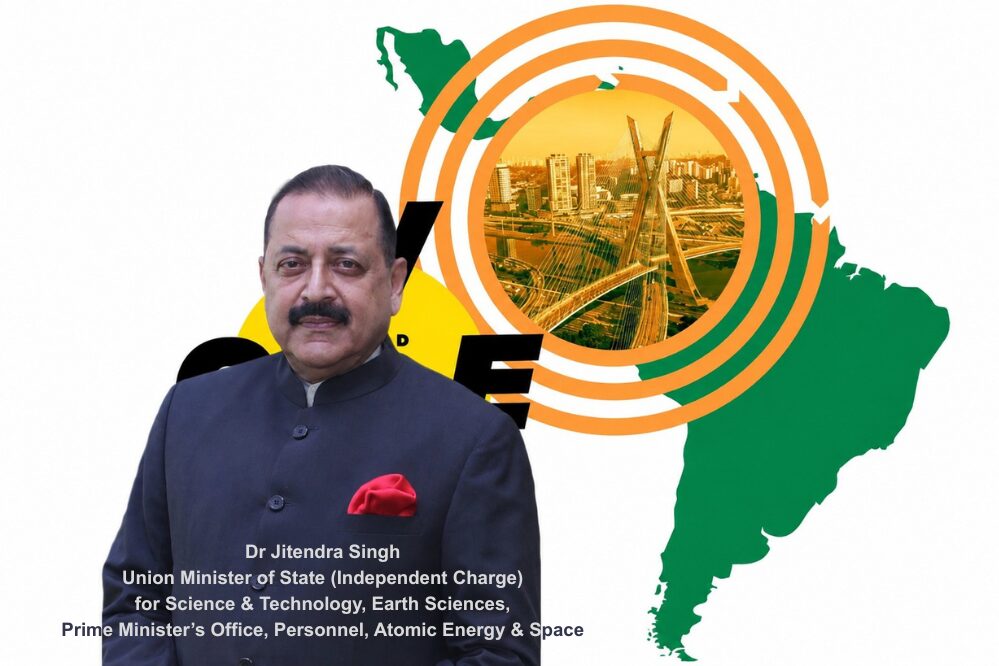
GANDHINAGAR, Gujarat, India — Global forums can set an agenda in two days. Changing the way an entire industry designs products, shares data, trains workers and manages materials takes much longer. As the World Circular Economy Forum (WCEF) comes to India for the first time in September, the strategic question is therefore not only what will be discussed, but which organisations will carry the work forward after delegates leave.
WCEF 2026 will be held in Gandhinagar from 15 to 18 September, marking the first time the forum has taken place in South Asia. The main forum on 15 and 16 September will include four plenaries and 16 parallel sessions, followed by accelerator sessions on 17 and 18 September. Its programme is organised around four tracks — people, business, governance and growth — and is intended to connect global ideas with implementation in areas such as value chains, skills, regulation, finance and market development.
The programme design itself acknowledges a fundamental reality: circularity is a collective-action problem. A manufacturer can redesign one product or reduce waste at one plant, but it cannot independently set an industry-wide definition of recycled content, align reporting methods across suppliers or create a market for secondary materials. Those tasks require coordination among companies, regulators, researchers, financiers and different stages of the value chain. This is where associations and industry coalitions can become more than participants in a sustainability conversation.
One WCEF 2026 session provides an early example. A parallel session on transforming textile value chains will be led by the United Nations Environment Programme and co-led by GIZ India and the Federation of Indian Chambers of Commerce and Industry’s (FICCI) Resource Efficiency and Circular Economy Industry Coalition. The session is expected to examine policy, business models, finance and multi-stakeholder partnerships. FICCI’s involvement matters because an industry body can take those discussions back to companies that share suppliers, regulatory obligations and market barriers — precisely the kind of coordination that no single firm can achieve alone.
The previous forum in São Paulo shows what that translation can look like. At WCEF 2025, the Federation of Industries of the State of São Paulo (FIESP) and Brazil’s National Confederation of Industry (CNI) published an e-book featuring 49 circular-economy cases and compiled a broader list of 204 practices from Latin America and the Caribbean. SENAI São Paulo, the industrial training service, also launched circular-economy courses in Portuguese, English and Spanish. These outputs extended the forum’s impact through case evidence, member education and skills development — rather than leaving implementation to individual delegates.
For associations, the practical role begins with identifying problems that members cannot solve alone. They can convene competitors to agree on common terminology, collect data that no single company can fully see, coordinate pilots across a supply chain, and present consolidated evidence to the government. They can also translate technical material into training for smaller companies that lack specialist sustainability teams. These are not abstract additions to an association’s mission; they are services that reduce uncertainty and make participation in a transition more achievable for members.
The test comes after the announcement or conference session. A pilot needs participating companies and an identified owner. A proposed standard needs a consultation process and a route to adoption. Training needs to be connected to changes in member practice. Associations should therefore measure more than attendance or the number of sustainability statements issued. More useful evidence would include member adoption of a shared method, the conversion of pilots into routine practice, policy changes informed by aggregated industry data, and new commercial partnerships across the value chain.
WCEF 2026 can provide associations with access to international evidence, partners, and tested approaches. It cannot by itself deliver an industry transition. That will depend on organisations able to translate global ambition into common rules, member capability and coordinated action. When the forum ends, the central question will remain: who will make the ideas usable across an industry? Associations are well placed to provide the answer, but only if they take responsibility for what happens next.