
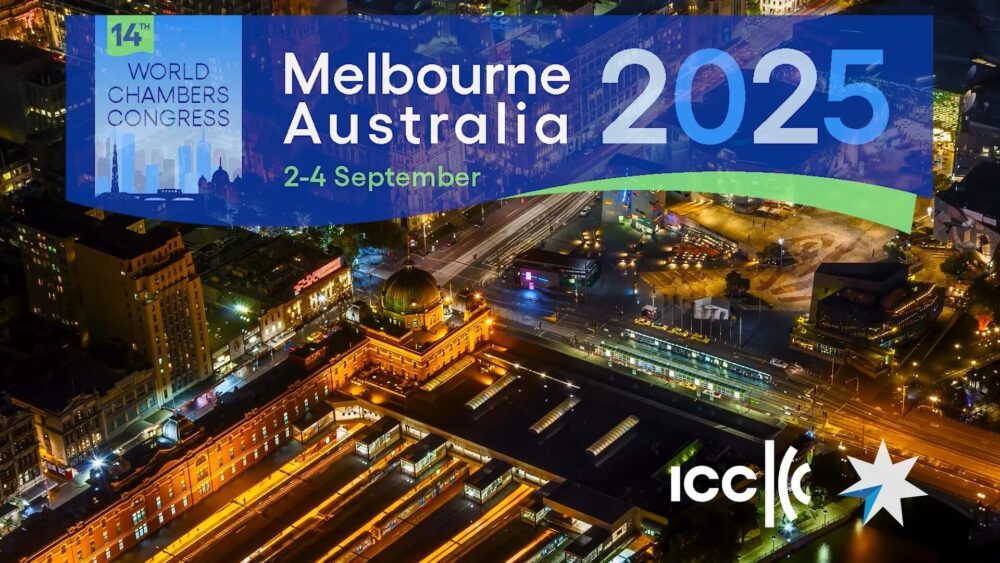
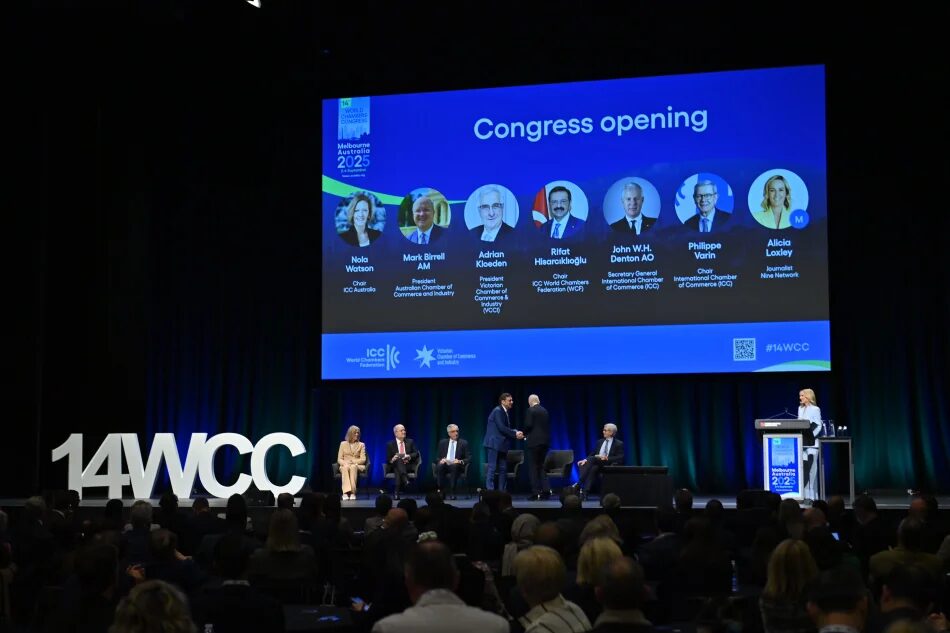
The 14th World Chambers Congress (14WCC), organised by the International Chamber of Commerce (ICC) and the World Chambers Federation, took place in Melbourne from 2 to 4 September 2025. The event marked the latest edition of the congress, which serves as a global platform for chamber leaders, policymakers, and business representatives.
The congress brought together more than 1,000 delegates from over 100 countries, including representatives from chambers of commerce, multinational companies, and international organisations. Held at the Melbourne Convention and Exhibition Centre, the programme included keynote sessions, panel discussions, and networking opportunities. ICC Secretary General John W.H. Denton AO and World Chambers Federation Chairman Rifat Hisarcıklıoğlu were among those leading discussions across the event.
Held under the theme “Business, Chambers, Government: Partners for Prosperity,” the congress focused on collaboration across sectors in the context of evolving global economic conditions. Sessions examined how partnerships between public and private stakeholders may support economic development, trade facilitation, and business resilience.
Key Themes
Digital Transformation in Global Trade
Discussions explored how digital tools are reshaping international trade processes. Sessions led by industry leaders, including Philippe Varin, examined the role of digital platforms in improving efficiency, transparency, and cross-border coordination. Participants also considered how digital adoption may support businesses in navigating increasingly complex trade environments.
Sustainability and the Green Transition
Sustainability was addressed through sessions focused on emissions reduction and climate responsibility. Speakers discussed the role of businesses in supporting net-zero targets, including ongoing collaboration between the ICC and international frameworks such as the UNFCCC.
A dedicated session on the green transition for small and medium-sized enterprises (SMEs), led by Dr Binnu Jeyakumar, examined approaches to adopting low-carbon operations and more sustainable supply chains. Case examples presented during the session illustrated how SMEs are applying energy-efficient technologies and circular practices in different markets.
SME Development and Global Market Access
The congress also examined challenges and opportunities related to SME internationalisation. Sessions led by speakers including Shevaun Haviland discussed barriers faced by smaller businesses when entering global markets, as well as initiatives supporting access to financing, mentorship, and digital capabilities.
Workforce development and entrepreneurship were also addressed in relation to youth participation in the global economy. Participants shared examples of chamber-led programmes supporting skills development and business creation in emerging markets.
Trust, Governance, and Industry Standards
Governance and trust in global trade were recurring topics across the programme. Sessions examined the role of ethical leadership, anti-corruption measures, and regulatory alignment in supporting stable business environments.
The World Chambers Competition Awards, presented during the congress, recognised initiatives related to transparency and responsible business practices. One of the projects highlighted included efforts by the Dubai Chamber of Commerce to strengthen regulatory compliance and business transparency through digital solutions.
The 14th World Chambers Congress reflects ongoing efforts within the global business community to strengthen collaboration across sectors while addressing challenges related to trade, sustainability, and economic inclusion. As international business environments continue to evolve, forums such as the World Chambers Congress provide a setting for stakeholders to exchange perspectives and explore practical approaches to shared priorities.