

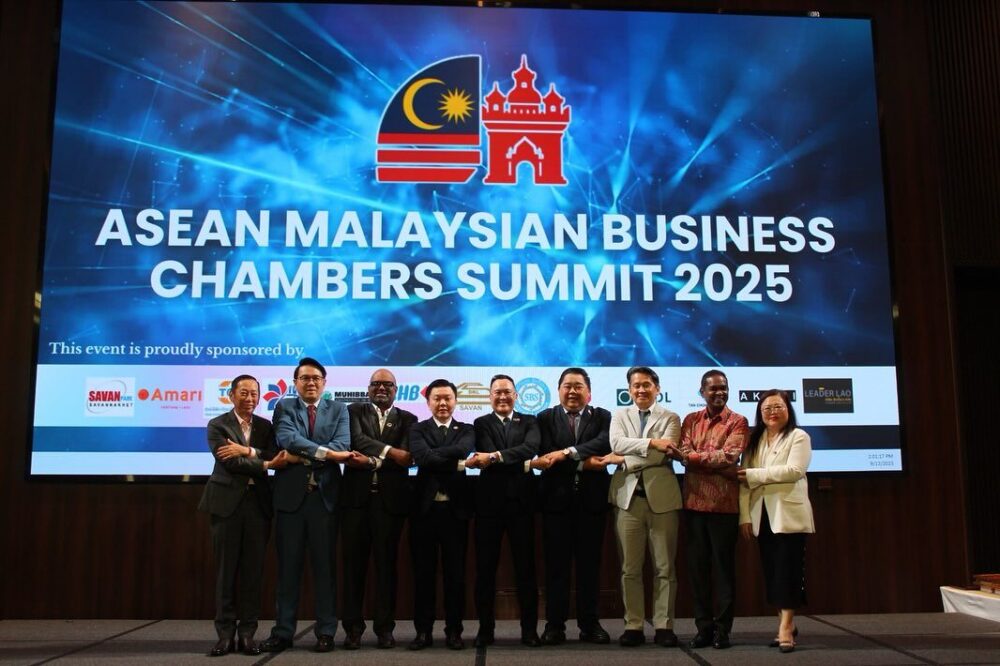
The MICCI Annual Business Summit 2025, organised by the Malaysian International Chamber of Commerce and Industry (MICCI), was held from 12–13 August 2025 at the Malaysia International Trade and Exhibition Centre (MITEC) in Kuala Lumpur. The summit brought together industry leaders, policymakers, multinational corporations, SMEs, and international organisations to examine how industrial transformation can drive sustainable economic growth.
Key participants included Raimund Klein of the International Centre for Industrial Transformation (INCIT), representatives from Malaysia’s Ministry of Investment, Trade and Industry (MITI), and agencies such as the Malaysian Investment Development Authority (MIDA) and Malaysia External Trade Development Corporation (MATRADE). MICCI leadership, including Christina Tee and Andy Choong Kar Foo, also played central roles in shaping discussions, alongside business leaders across sectors.
Centred on the theme of industrial transformation, the summit explored how Industry 4.0, sustainability, and cross-sector collaboration can strengthen Malaysia’s competitiveness while ensuring inclusive and responsible growth.
A major focus of the programme was how digitalisation can be applied in practical, measurable ways. Raimund Klein introduced INCIT’s COSIRI framework, demonstrating how manufacturers can quantify carbon intensity and resource efficiency, shifting ESG from broad commitments to performance-based management. Complementing this, Christina Tee highlighted the use of Smart Industry Readiness Index (SIRI) tools to monitor factory-level energy consumption, noting that SMEs could potentially achieve efficiency improvements of 15–20% through data-driven optimisation.
From a policy perspective, Liew Chin Tong of MITI outlined Malaysia’s National Industrial Master Plan 2030 (NIMP 2030), emphasising the need to align industrial development with sustainability goals and inclusive economic outcomes. His session highlighted how government–industry collaboration can support Malaysia’s transition towards a high-income, innovation-driven economy. In parallel, representatives from MIDA discussed green investment incentives such as the Green Investment Tax Allowance (GITA), designed to accelerate adoption of low-carbon technologies and sustainable industrial practices.
Beyond environmental performance, the summit placed strong emphasis on workforce transformation and inclusive growth. Andy Choong Kar Foo addressed the importance of reskilling initiatives, particularly for SMEs and younger workers, noting that digital training programmes are essential for adapting to automation and advanced manufacturing technologies. Meanwhile, Lee Ting Han highlighted regional collaboration through the Johor–Singapore Special Economic Zone (JS-SEZ), presenting it as a model for generating higher-quality jobs and strengthening economic integration.
The summit also reinforced the importance of governance in enabling sustainable industrial transformation. Raimund Klein stressed that the adoption of artificial intelligence and digital systems must be supported by robust data governance and cybersecurity frameworks to ensure trust across global supply chains. Building on this, Christina Tee emphasised the need for Malaysian companies to align with international ESG disclosure standards and strengthen anti-corruption compliance, particularly in cross-border trade and investment.
Across discussions, the MICCI Annual Business Summit 2025 demonstrated a clear shift from high-level sustainability ambitions to actionable implementation. By combining digital tools, policy alignment, and industry collaboration, the summit highlighted how Malaysia’s industrial sector can enhance competitiveness while advancing environmental responsibility, workforce inclusion, and transparent governance.